The partnerships between the AAFS and police sciences are very strong and professionally intertwined in the US criminal justice system. The organization was originally founded by police crime lab personnel amongst a smattering of lawyers, governmental (state. or local jurisdictions) pathologists and lab technicians. The dentists came later, quite thrilled with being recognized as a distinct member of the crime fighting community. The advent of DNA profiling from incredibly small portions of sweat, blood, saliva, and body fluids came aboard during my mid years as an AAFS member (aka Fellow) about 18 years ago. My motivation to follow the DNA section of the AAFS (aka Criminalistics) proved to be a personal and professional turning point as I had been trained and observant of “renowned” bitemark dentists claiming to be as good as fingerprint examiners (I call this “science”…
PCAST report raises questions about validity of forensic sciences in criminal courts
A new draft report from the President’s Council of Advisors on Science and Technology (PCAST) has caused concerns about the use of modern forensic science techniques in the criminal justice system, stating: “It has become increasingly clear in recent years that lack of rigor in the assessment of the scientific validity of forensic evidence is not just a hypothetical problem but a real and significant weakness in the judicial system.”
The report acknowledged PCAST’s concerns with the lack of agreement in the scientific community in analyzing complex DNA mixtures, noting: “Subjective analysis of complex DNA mixtures, including with the widely-used Combined-Probability-of-Inclusion methods, is not foundationally valid…and objective analysis of complex DNA mixtures with probabilistic genotyping software is promising, but has not yet been sufficiently and appropriately validated and their limitations to be considered reliable for all complex mixtures.”
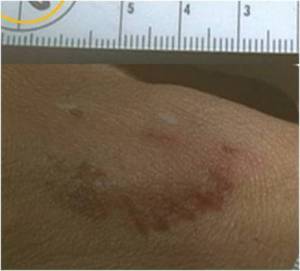
The PCAST report also addressed the need for empirical standards in pattern-based forensic science methods, such as bite mark analysis, fingerprint matching, firearm/ballistic matching and shoe tread analysis: “In the case of bite-mark evidence, the report is especially critical. ‘PCAST finds that bitemark analysis does not meet the scientific standards for foundational validity, and is far from meeting such standards,’ it reads. ‘To the contrary, available scientific evidence strongly suggests that examiners cannot consistently agree on whether an injury is a human bitemark and cannot identify the source of [a] bitemark with reasonable accuracy.’
More significant headway in forensic testing and exoneration litigation. One exception might be the premature excitement over hair protein profiling. It is very preliminary. Congrats on the OIP’s wonderful new donor!
On occasion, I have used AAFS annual convention banners in my blog posts. The reader must not be not be misled or misconstrue or consider that act as that organization endorsing the content and opinions present within my publications. If that misconstruction has occurred, then this statement should clarify this issue. I have no authorization to speak as a representative of the AAFS.
Sidebar:
I have no idea why the Odontology Section of the AAFS has ceased sponsoring its “bitemark breakfast.”
They are continuing their long tradition of promoting bite mark advocates with awards at the next annual AAFS convention. In 2017 its coming to New Orleans.
A very recent missive from the AAFS News alert always provides announcements of the org’s various multi-disciplinary forensic sections. The Odontology Section in this issue is glowing with praise for a couple of senior AAFS/ABFO forensic dentists who have lived on and through from the glory days of bite marks as a “novel” and compelling impression-matching discipline. That’s just about 41 years since the 1975 MARX decision in California helped to raise them to admissibility acceptance around the United States. What’s still current in all state’s law books are other bite mark cases which helped convict defendants and convinced other jurisdictions to follow their lead. The “Domino effect” for courtroom acceptance.
Here is a strong sign of legal prevarication and systemic inertia. Some of these convictions were dismissed and the defendants exonerated via post-conviction DNA testing and recent junk science legislation. No official change or update has happened.
So, back to the Odontology award section. The awardees have either recently testified in courts (see the Dean case from NYC) or before forensic commissions as proponents in favor of bitemark identifications in its various subjectively “approved by the ABFO” forms.
In addition, a decades long “Tom Krauss Bitemark Breakfast” has been held by the dentists. It has hosted some remarkable people generally outside the small group of dentists, but under an onslaught of narrow thinking, now has devolved to something different. The late Dr. Krauss was the co-developer of the innovative, much used and now much copied “ABFO No.2 Scale.” CSIs love it.
As a denouement to past greatness, here is one of the breakfast’s more recent notable speakers. Melissa Mourges is a senior deputy District Attorney for Manhattan. She fought for bitemarks in a particularly offensive way less than 3 years ago, but later lost due to her own office overruling its use. Possibly the removal was called by public complaints to her boss and the NY Bar Association. See “In an angry, defensive memo, Manhattan DA’s office withdraws bite mark evidence.”
Here’s the latest from AAFS Odontology: It is from the current ABFO president who is also the Sec’try of the AAFS section.
“Please remember that this will be the first year the Odontology Section will not host the Thomas Krauss Memorial Bitemark Breakfast; instead, the bitemark portion of the scientific session will be named in his honor. You have the ability to be part of this history by attending its inaugural. I am very proud to announce that the Awards Committee for the Odontology Section met, discussed, debated, and have settled on two well-deserving recipients.Frank D. Wright has been chosen to receive the Reidar F. Sognnaes Award of Excellence in Forensic Odontology. This award recognizes the achievement of an individual in the field of forensic odontology. The recipient must be a member of the Odontology Section and must have made a significant contribution to the field of forensic odontology. The award specifically relates to excellence in forensic odontology, not to what the individual does outside of the field of forensic odontology. Thomas J. David has been chosen to receive the Lester Luntz Odontology Award. This award is based on excellence as it relates to forensic odontology, along with involvement in and contributions to the American Academy of Forensic Sciences Odontology Section. Please join me in congratulating both of these well-deserving individuals. We as an organization are better off due to their hard work over the past four decades.”
At this point, I have no idea what new or aspiring dentists who are interested in pursuing forensic training have been told about any of this. Its apparent that the ABFO is continuing its training programs co-incident with the AAFS meeting in New Orleans. **
“The American Board of Forensic Odontology will be hosting two workshops this year, the Expert Witness Workshop and the Age Estimation Workshop, both of which will be held on Sunday, February 12. While there are no longer any participation spots available, there are a small number of observer spots available. “
There is no AAFS oversight into what these professed educators will provide as to the content of their “Expert Witness Workshop.” The alternative course content the following year will assuredly be all about Bitemark Analysis.
Possibly the upcoming Forensic Specialties Accreditation Board’s review of the ABFO’s pending five-year “recert” will provide some redirection to their public an courtroom activities.
Sidebar: One ABFO member has responded so far.
“I don’t think I will be attending the awards ceremony.
* AAFS 2017 Convention banner retracted 9/13/2016
** AAFS 2017 Convention website link added 9/13/16
Bad DAs in the OC, executing innocent people, untested rape kits, first exoneration for MIP, bad Brooklyn DA’s culture leads to group filing for 22 conviction dismissals.
Bill Richards, who spent nearly 23 years in prison based on dubious bite-mark evidence, was released in June.
Photo: Courtesy of Michael Semanchik, California Innocence Project.
The inimitable and award winning Jordan Smith at The Intercept once again lays the hammer on the prime example of unvalidated science cloaked as “crime fighting” expertise in the modern era. She has written previously about Bill Richards’ (picture above) 23 year long battle towards innocence here, here, and most recently “Its Absolutely Stupid a Fifth Trial Planned in bite-mark Murder Case.”
The Intercept from this Wednesday.
“In the case of bite-mark evidence, the report is especially critical. “PCAST (The President’s Council on Science and Technology) finds that bitemark analysis does not meet the scientific standards for foundational validity, and is far from meeting such standards,…….”
The White House report concludes that bite-mark analysis is junk science. Here is The Interecept’s article. http://interc.pt/2cGaUei by @ chronic_jordan
It’s all about the White House and its scientific (but thank goodness not forensic) panel who delved through the mountain of mis-information and damage caused by a small host of forensic dentists since 1975. This WH commission has be on this subject for years.
What’s really good is that Jordan has met and heard all of the heavy hitters of bitemarks. Her writing reflects first hand knowledge to how unrealistic their posturing has become in the quiet halls of the American Academy of Forensic Sciences and not so quiet hearing rooms of the Texas Forensic Science Commission. At various professional meetings, I at first insisted she and I had to meet surreptitiously so she wouldn’t be “tainted” by my presence. We met in a parking structure in Orlando next to the AAFS hotel. At first she thought it an odd meeting place. Soon, it became a running joke for both of us.
The bitemark bunch soon found us out by other means ( at some point we had breakfast together) and then cancelled interviews she had scheduled with them and avoided her from the corners of the various AAFS meetings, hallways and wine/cheese “mixers.” The refusal to have press interviews goes back to 2013 when they cancelled out on the Associated Press at the Washington DC AAFS meeting. Soon thereafter, the AP came out with AP IMPACT: Bites derided as unreliable in court.
“You have no balls” says a forensic dentist.
This February in Las Vegas, Jordan and her Intercept colleague Liliana Segura (@lilianasegura) had a hallway “fly-by” meet with Dick Sourviron (picture above), the noted Ted Bundy bitemark innovator who seems to dislike journalists a bit since his Bundy bitemark halcyon days of positive press over Bundy’s teeth marks in 1978. He was all pleasant until I introduced these ladies as media professionals. Lacking some ability to be polite, Dick just sauntered away.
This pales in the light of an ABFOer’s (a past president of the bitemark group) hilarious “you have no balls” 2015 thundering public statement at a Orlando FLA dentistry meeting to the then AAFS president. The dentist later apologized. This occurred soon after my continuing AAFS membership, jeopardized by a contrived formal complaint protest from the American Boarders of Forensic Odontology, was reconfirmed at the Academy’s Board of Director level. Back in 2013, one of the dentists mentioned in the AP article noted above called me a “murderer of bitemarks.”
Some of these bitemark dentists just seem stressed out or worse. Read Radley Balko’s lastest on another dentist of considerable fame. That would be Michael West from Mississippi.
“Expert witness (West) goes nuts during questioning……” here. And here is what West’s protector, MS attorney General Jim Hood, has to say about criminal defense attorneys. This May, there were significantly worse words said in the Columbus MS court hallway.
Ohio and other states are not providing everything they can to help families track missing loved ones, according to experts. Full article from Ohio.
Despite the creation of a national database nearly a decade ago to assist in identifications, few states require their law enforcement and coroners use it. Currently, 14 percent of the estimated 85,000 missing persons and 33 percent of an estimated 40,000 unidentified remains across the country are included.
And of those cases that are entered, most are missing a key detail that can lead to an identification or exclusion in as little as one day. In Ohio, that detail – dental records – isn’t shared by the state’s crime lab in the name of privacy, which leads to delays or potential matches being overlooked, according to Todd Matthews, director of case management and communications for the National Missing and Unidentified Persons System (NamUs).
“If I had a loved one missing, I would certainly want every piece of available data in the system … Much of the success of NamUs is allowing the criminal justice community to proactively search, compare and exclude in a process of elimination. Ohio cases simply will not share that benefit without those records,” Matthews said.
Name us
NamUs’ founding is rooted in a 2005 summit on the “silent mass disaster” of unidentified remains across the country. A key need identified was a national searchable repository of case information for both the missing and unidentified remains.
In 2009, an upgrade to the fledgling system made it capable of automatically cross-searching for potential matches it presents as side-by-side comparisons for law enforcement, coroners and NamUs’ forensic staff.
The database also is open to the general public with certain information, such as fingerprint and dental records, withheld.
As of the end of August, NamUs has aided in the identification of 788 unidentified remains cases across the nation. Currently, there are more than 11,000 cases in the database.
“If these records are uploaded into NamUs, the missing can be searched by allied professionals in every state of the union. The cost is nothing (to the local agency),” Matthews said.
However, few states require cases be uploaded into NamUs.
Chillicothe police Capt. Larry Bamfield was unaware of NamUs until 2014 when Charlotte Trego disappeared. Trego was the first of a series of women in Chillicothe reported missing in 2014 and 2015 and remains missing along with Wanda Lemons. Four other women have been found dead.
Bamfield entered both Trego and Lemons’ cases into NamUs within months of their disappearances. While the National Crime Information Center and a similar state system are helpful if someone missing is contacted alive by law enforcement, it’s not as effective if the person is dead, Bamfield said.
“If they find a body and they’re looking for someone forensically, this (NamUs) is what they look at,” Bamfield said.
Missing Ohio
In Ohio, case information on unidentified remains are required to be submitted to the state crime lab, which is overseen by the Attorney General’s Office. Although the lab isn’t required to submit them to NamUs, it does, but it does not submit missing person cases – roughly 1,200 on any given day – kept in its own public database. About a quarter of those are in NamUs, submitted by local law enforcement and families.
“The reason we don’t put all missing persons cases into NamUs is because the vast majority of missing persons are found within 48 hours,” said spokeswoman Jill Del Greco.
The office also withholds dental and fingerprint records related to those cases, a point of frustration for Matthews.
“It’s like trying to put together a puzzle without all of the pieces,” Matthews said.
While the identification capabilities of DNA gets a lot of focus, comparisons are more expensive and take months to do. If there are dental records, especially already within the database, a comparison can be done the same day and typically are the first cases checked for comparisons by NamUs staff.
Of the current missing person cases in NamUs, roughly two-thirds nationally and in Ohio don’t have dental records uploaded. The unidentified remains cases fair better, with 54 percent having dental records entered nationally and 64 percent in Ohio.
Missing dental records sometimes occurs because none can be found or teeth are incomplete in the case of the unidentified. However, Ohio’s decision to hold back dental records is rooted in privacy, Del Greco said, because NamUs can’t guarantee the records won’t be shared with non-law enforcement.
Power of teeth
The privacy argument is one Dr. Adam Freeman, president of the American Board of Forensic Odontology, has heard before and considers “a little ridiculous.”
“It’s the equivalent, to me, of saying we’re not going to use email … The public benefit of making them available to law enforcement outweighs the risk of someone seeing your X-rays,” Freeman said.
Local law enforcement in Ohio, according to Matthews, have submitted dental records to NamUs, but getting them becomes an issue when those records have been sent to the state crime lab. Up until about four years ago, Matthews said the state lab had shared dental records, but Del Greco said that was done in error.
That process creates a delay and “sort of defeats the purpose of the system,” Matthews said. Also, Freeman – who has been a forensic odontologist for 14 years – contends coding isn’t as useful as the Attorney General’s Office makes it seem.
Although coding can help narrow a search, thousands of people could still have the same general dental information, said Freeman. It can’t be used alone for positive identification and rarely can be the sole source to exclude someone.
As a result, when code brings up possible matches in the system, they are more likely to not be compared without a request from an agency when those X-rays aren’t in the system.
Del Greco said they meet with NamUs periodically, most recently in April, but officials were unable to guarantee records would not be shared with those “outside the realm of what Ohio law allows.” Neither Freeman nor Matthews are aware of any instance where NamUs information was inappropriately accessed.
“I can’t imagine my dental records would cause any embarrassment or harm,” Matthews said. “When someone is missing, there needs to be compromises.”
The inconsistent process the innocent endure in obtaining their freedom. Some succeed, some do not. Deeper studies into contributing factors leading to exoneration or continued incarceration needs alot more public attention.







.jpg)


