Utter Crap abt Climate Change from Congressional Sci Committee #AAFS2017

Related image

All this claptrap from climate deniers hired as Trump’s Congressional ‘science’ appointees relies on claim of “fake data” published a Brit tabloid. If you read through this short piece, it will resound with the “one paper now debunked” proof aka the “anti-vaxxers mantra.” I’m certain 1/2 of this committee are Evolutionists.

Posted in junk forensic science | Tagged , , | Leave a comment

Scientific Data Dumps Expanding because of President Trump?

Image result for mind control

Blocking government data continues by the Trump cabal of mind controllers. I’m sure this affects and favors BigPharma more than than the media realizes. Animal welfare data blocked by US Agriculture Dept.
https://www.washingtonpost.com/news/animalia/wp/2017/02/03/the-usda-abruptly-removes-animal-welfare-information-from-its-website/?utm_term=.afc99012d968

csidds's avatarFORENSICS and LAW in FOCUS @ CSIDDS | News and Trends

Image result for slamming doors

In a world that does not conform to much common sense, some reports exist from December 2016 and today that DJT’s Executive Branch admin (which started today) poses a threat to existing weather and environmental data. Does this supposition apply elsewhere in the realm of governmental controlled research and criminal justice data? What about forensic grants and funded experimentation and social justice research?

Just askin’.

By the way, right after the 45th president was christened this morning, the White House website on climate change was junked according to followers on Twitter. (caveat emptor)

Disappearing WH climate change website: (CNBC today).

Scientist are frantically copying weather data, fearing it would vanish under Trump. Washington Post.(Dec 2016).

The Verge (Dec 2016)

View original post

Posted in AAFS | Tagged , | Leave a comment

Massive ‘Pirate Bay of Science’ and Publishers leads to Battles with some Russians

Image result for pirate publishers

I just found five Internet sites that claim to have free access to our latest book. All of this leads to reasons why journals subscriptions and textbooks are $$$ and out of reach to many of us as the honest consumer pays the price for shoplifting and fraud. Authors also get the shaft. A Russian “lady researcher” and the Sci-Hub pirate site make their play by saying “science belongs to no one,” and how capitalism is “illegal.”

Sci-Hub access page (download from Russia. What’s to lose with that?).

This article from 2016 explains this threat ( or boon for some) to big business.

Science Alert: “Researcher illegally shares millions of science papers free online to spread knowledge.” 


Posted in forensic testimony | Tagged , , , | Leave a comment

Looking at the ashes of human and animal bones – Calgary Triple Murder -#AAFS2017

Testifying in a Canadian murder trial, a long time dentist says this is a human baby (deciduous) tooth. Any comments out there about his opinion?

News article with tweets about the case.

Posted in AAFS, human identification | Tagged , , , | Leave a comment

More scientists gang up against the bitemarkers – Oxford University Press -#AAFS2017

Image result for lighthouse in the storm

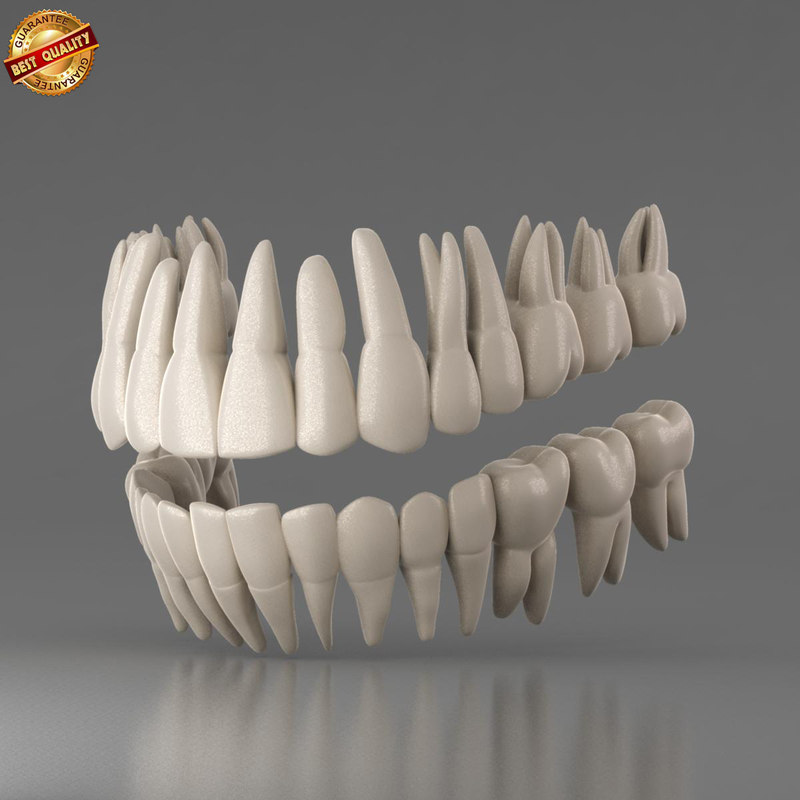
It’s just a dental journal (see pg. 68), but this op-ed piece may be the FIRST time organized dentistry has spoken out about the flim-flam of bitemark ‘science.’ The anonymous author is quietly referencing a recent publication from the Journal of Law and the Biosciences titled “Forensic bitemark identification: weak foundations, exaggerated claims.”  Use this link to access. The JLB journal is a co-venture between Duke University, Harvard University Law School, and Stanford University, and published by Oxford University Press.

From the Journal of the California Dental Association: (Feb 2017)

It’s Time to Stop Using Bite Marks in Forensics, Experts Argue

Researchers are increasingly skeptical about the validity of bitemark identification as trial evidence, according to a paper published in the Journal of Law and the Biosciences. The paper describes the legal basis for the rise of bite-mark identification and reviews relevant empirical research on the subject, highlighting the lack of research and support provided by the research that does exist. Studies of wrongful convictions based on DNA exonerations have found the forensic sciences to be second only to eyewitness errors as a source of false or misleading evidence contributing to erroneous convictions, according to the paper, which also states that error rates by forensic dentists are perhaps the highest of any forensic identification specialty still practiced. One recent evaluation sought to examine all empirical research aimed at determining whether all human dentition is unique. Following an extensive bibliographic search, 13 studies were found and each was reviewed in detail. None were able to support a conclusion of dental uniqueness, according to the paper. Moreover, recent reviews of the field’s claims, as well as recent empirical findings, have underscored the lack of reliability and validity of the most fundamental claims about the ability of forensic dentists to identify the source of bite marks on human skin. A number of DNA exonerations have occurred in recent years for people convicted based on erroneous bite-mark identifications. A committee of the National Academy of Sciences recently concluded that bite-mark identification testimony has been “introduced in criminal trials without any meaningful scientific validation, determination of error rates or reliability testing.”

Michael Saks, a psychology and law professor at Arizona State University and lead author of the paper, said evidence-based evaluation of forensic techniques has only recently been recognized as essential to establishing scientific claims. “And bite-mark identification has become a central focus of concern,” he said. To learn more about this debate, visit http://jlb.oxfordjournals.org.


Posted in criminal justice reform, CSI, wrongful convictions | Tagged , , , , | 1 Comment

Brave New World of Prosecutor Misconduct – Bitemarks and Melissa Mourges – #AAFS2017

Image result for bunk in science

In a show of force, collegial prosecutors combine efforts to influence judges to accept half-truths and fraud from the forensic ‘world’ of bitemark matching. Nothing says it better than this new article from the Washington Post. (Ms. Mourges is a DA from New York). This prosecutor doesn’t like me or the cohort of “truth in science” folks, may they be real scientists, researchers or defense counselors.

“Incredibly, Prosecutors are still defending bitemark evidence. 

A portion of previous blogs on this subject.

  1. Mourges redacts the NAS report on bitemarks  to mislead a NY judge. 
  2. Mourges running her mouth in public. 
  3. Playing ‘whack-a-mole’ with bitemark believers.
  4. Mississippi courts love the bitemarkers. 
Posted in AAFS, ABFO, Bitemarks, criminal justice reform, forensic science misconduct, forensic science reform | Tagged , , , | Leave a comment

A Monopoly Game of Rules: prosecutors, defense attorneys, forensic experts #AAFS2017

Image result for tucker carrington

More Rules for those interested in how Ethics responsibilities appear in the US legal compendium. All the players are included.

Here (at the bottom) is the abstract of a future presentation by Mississippi Innocent Project’s founder and director, Tucker Carrington III (above), at the Innocence Networks’ annual meeting on March 24 and 25th, 2017, in San Diego, CA. Tucker has and is continuing to be instrumental in many of the exonerations in MS regarding junk forensic experts, post-conviction DNA testing and combating the good ole boy network of prosecutors and Attorney General Jim Hood have going in that Southern state. All the same issues are also seen in Northern states as well. But first…………..

BTW, Tucker is co-authoring, with Radley Balko and John Grisham (foreward), a true crime and criminal justice book titled: “Dr. Death and the Country Dentist. A True Story of Corruption an Injustice in the American South.” Here’s is the promo piece about it.

This is a tale of two tragedies.

At the heart of the first is Dr. Steven Hayne, a doctor the State of Mississippi employed as its de facto medical examiner for two decades. Beginning in the late 1980s, he performed anywhere from 1,200 to 1,800 autopsies per year, five times more than is recommended, performed at night in the basement of a local funeral home. Autopsy reports claimed organs had been observed and weighed when, in reality, they had been surgically removed from the body years before. But Hayne was the only game in town. He also often brought in local dentist and self-styled “bite mark specialist” Dr. Michael West, who would discover marks on victim’s bodies, at times invisible to the naked eye, and then match those marks—“indeed and without doubt”—to law enforcement’s lead suspect.

================================================

Innocence Network Proceedings: Carrington

Forensic Disciplines — Old and New — and Associated Professional Ethics

Very recently, there have been significant changes in and around traditional forensic disciplines. Likewise, there have been significant changes in rules of professional and ethical conduct that are implicated when an attorney— defense or prosecutor— or lab technician becomes involved with these disciplines in an adjudicative context. This roundtable discussion will consider several hypothetical practice-based scenarios and ask the participants to navigate them in the specific context of: Model Rule of Professional Conduct 3.8(g) and (h);  Defense Function Standard 4-9.4; the ABA’s Draft Resolution dated June 20, 2016; the National Code of Professional Responsibility for Forensic Scientists (The Code);  and the DOJ Code of Professional Responsibility for the Practice of Forensic Science. (See links to the Rules below).

Model Rule of Professional Conduct 3.8(g) and (h);

Defense Function Standard 4-9.4; the ABA’s Draft Resolution dated June 20, 2016;

the National Code of Professional Responsibility for Forensic Scientists (The Code);

and the DOJ Code of Professional Responsibility for the Practice of Forensic Science.

Posted in Uncategorized | Tagged , , , , , , , | Leave a comment

Looking at a Model Rules for Forensic Conduct – #AAFS2017

Image result for no rules quotes

Ironically, the legal profession in the US and British Commonwealth have Rules of Conduct for lawyers. I am at a loss as to Rules for the Forensic Expert that follow these scientific method protections in research and testimony to the extent presented in this new paper:

An Empirical Research Agenda For the Forensic Sciences by Koehler and Meixner.

TABLE OF CONTENTS

INTRODUCTION …………………………………………………………………………………. 3

  1. HISTORY ……………………………………………………………………………………….. 6
  2. WHERE TO FROM HERE? ……………………………………………………………….. 8

Descriptive Studies: Examiner Methods …………………………………… 10

Study 1: What do examiners generally look for in making comparisons? …………………………………………………………….. 10

Study 2: How much variability is there in examiner methods? ………………………………………………………………….. 12

Study 3: Do the most effective examiners employ unique methods? ………………………………………………………………….. 13

Descriptive Studies: Effects of Differences in Sample and Methodology on Accuracy ……………………………………………….. 14

Study 4: Does the difficulty of the sample affect accuracy? ….. 15

Study 5: Applying signal detection theory: Can examiners’ decision thresholds be shifted? …………………………………….. 16

Study 6: Does examiner confidence correlate with accuracy? ………………………………………………………………….. 17

Study 7: Does the use of a computer database affect match report accuracy? ………………………………………………………… 18

Study 8: How many points of similarity should examiners use?………………………………………………………………………….. 20

Descriptive Studies: Effects of Biasing Information and Methods on Accuracy ……………………………………………………… 21

Study 9: Does biasing information interact with the questions examiners are asked to answer? …………………….. 22

Study 10: Does the presence of multiple samples or the order in which samples are examined bias conclusions? …. 24

Study 11: Are examiners affected by knowledge of a forthcoming review? ………………………………………………….. 25

Study 12: Can examiners be debiased? ………………………………. 26

Descriptive Studies: How Examiners Report their Results and how Judicial Actors Interpret Them…………………………………… 27

Study 13: How do forensic examiners actually testify in court? ……………………………………………………………………….. 28

Study 14: How should examiners present evidence in court? ……………………………………………………………………….. 29

CONCLUSION ………………………………………………………………………………….. 31

Posted in criminal justice reform | Tagged , , , , | Leave a comment

Advances in #Forensic #Science influenced by Exonerations – Peter Neufeld #AAFS2017

This is for those so inclined to wonder “why” scientific advances in forensics suggested by nationally recognized scientists should be shunned, ridiculed and attacked by the police. It has nothing to do with “throwing the baby out with the bath water” (an anthem for some PCAST detractors and conspiracy hyperbolists).

Peter Neufeld (NY Innocence Project) 4 minute video. 

Thanks to @CeliaGivens at the NY Legal Aid Society.

Posted in Uncategorized | Tagged , , , | Leave a comment

PCAST ‘withering under intellectual scrutiny’ = #Alternativefacts #Forensic #Science

nat-reg-exon

I’ve been waiting for this rag to come out with this type of mendacious Alt-Speak about the scientific efforts focused on forensics by the US Congress, National Academy of Sciences, and Obama’s Executive branch. This scrutiny (by established empirical scientists in many cases)  took a  deep look into why wrongful convictions and incarcerations are aided by overblown ‘forensic’ expertise’s performance in police crime labs and criminal courts . Their reports rocked the entrenched forensic establishment types that resulted in generous denials to legitimate criminal law social science data including:

Exonerations (24% of 1,996) associated with flawed expertise in the judicial meta-record. But who cares about facts as long as would-be crime lab geniuses carry the mantel of “crime-fighters” ?

Here’s a snippet………

“Our outgoing president is a trial attorney.  A major focus of his administration was criminal justice reform, and for good reason. We have very complex problems in how we administer justice in the United States.  But President Obama went too far.  He gave safe haven to legal activists who then attacked forensic science with near impunity – hoping to weaken its stature in courts of law.”

Full article at Science 2.0 (excuse the irony)

Plus, this from 2014, where the “2.0” births its conspiracy theory against the National Registry of Exonerations and, by association, the scurrilous criminal defense Bar of the United States.


Posted in costs of wrongful convictions, criminal justice reform, Forensic Science Bias, forensic science reform | Tagged , , , , | Leave a comment