
Hearings | Hearings & Legislation | House Committee on Science, Space and Technology
— Read on science.house.gov/hearings/raising-the-bar-progress-and-future-needs-in-forensic-science
Best minds in the business. Mostly female. Quite nice.
Hearings | Hearings & Legislation | House Committee on Science, Space and Technology
— Read on science.house.gov/hearings/raising-the-bar-progress-and-future-needs-in-forensic-science
Best minds in the business. Mostly female. Quite nice.
Unreliability of forensic experts gets serious attention from a high level jurist. Some of this started in California’s bitemark case of Bill Richards. @CA_Innocence.
A UK study group describes their study as demanding a “holistic overhaul” of these practices taken into criminal courts. It contains a good review of US exoneration efforts to effect forensics. Too bad the police controlled forensic managers seem deaf to most of this.
https://www.chemistryworld.com/careers/cleaning-up-misinterpreted-forensic-evidence/3010852.article
This is a well referenced look at BPA. The perspective is clearly science-based and unfettered by practitioner assumptions and biases. Rather refreshing, to put it mildly, and it also uncovers how BPA experts don’t agree with each other on basic spatter evidence.
There is not enough funding to do this properly. Volunteers are commonly not reimbursed. Politicians ignore the dead.
https://phys.org/news/2019-08-humanitarian-forensic-scientists-dead-comfort.html

Many reform ideas in this series of Q&A to forensic and legal experts by the WaPo’s Radley Balko. All are logical and very practical. Prosecutors must be gagging. Here is a quote:
Chris Fabricant, the Innocence Project
Easiest reform:
Eliminate bite mark evidence.
Mid-level reform:
State forensic science commissions, staffed by career scientists, that produce rigorous basic and applied research, and, based on that research, issue mandatory guidelines for the introduction of and the testimonial limitations of all forensic evidence.
If I were dictator:
The same, only at the national level.
This time it is in Australia. It does mentions that bitemarks are now outlawed Down Under? Now how did THAT happen? I havent heard a peep abt it.
The judge below is a good guy, the Honorable Harry T. Edwards.
Just another chapter in how judges can’t get away from looking at changes and evolution in forensics (this time its fire science) in the most restrictive sense via improper legal reasoning and by saying that”unsettled” forensics means that old school experts are still credible. Some one should tell these blokes that there is no Supreme Court equivalent in the world of forensics. Here’s a prime example: The bitemarkers (mentioned in this article as well) are still certified by the American Academy of Forensic Sciences.
Here’s a quote from a LA Superior Court judge in this recent arson-based habeas corpus hearing.
In November, Los Angeles County Superior Court Judge William C. Ryan ruled that the new flashover evidence was insufficient to win Parks a new trial because the experts cannot agree on its significance. “The world of fire science and fire investigation is a complex area rife with differing opinions and contentious debates,” Ryan wrote.
https://www.latimes.com/opinion/op-ed/la-oe-humes-forensic-evidence-20190113-story.html
It has been 10 years since the National Academy of Forensic Sciences put out its report on forensics and its failures and discrepancies. The man below ( who co-chaired this effort, is the Honorable Harry T. Edwards), talks about the events since 2009. Here’s a bit from the NAS findings:
The report not only exposed the paucity of scientific research to support forensic methods, it also detailed some dubious practices in crime laboratories, the absence of rigorous certification requirements and robust performance standards for practitioners, and the failure of forensic experts to use standard terminology in reporting on and testifying about the results of forensic investigations.
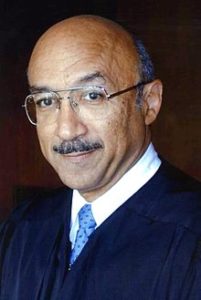
Click on Judge Edwards to read his 2019 perspective on the 10 years since NAS “Strengthening Forensic Science in the United States: A Path Forward.”


