The rise of the Innocence Project was based on DNA and a fractured system of forensic science

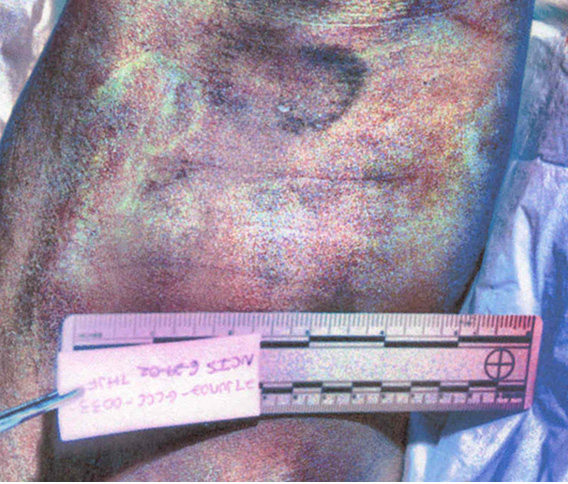
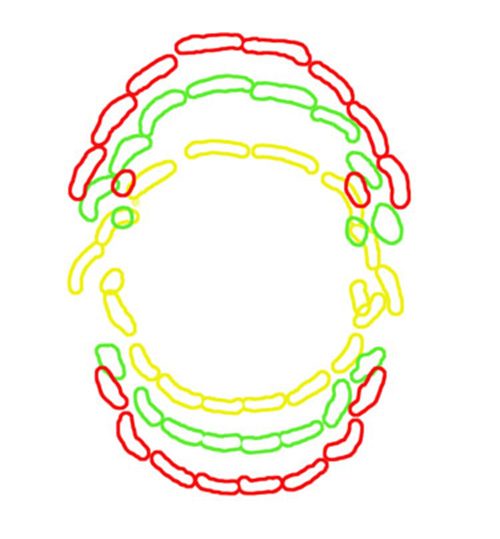
What the CALIFORNIA Innocence Project has to say about bitemark evidence. Undoubtedly this is why forensic reform opponents want to kick exoneration litigators off the NYS Forensic Science Commission.

From the CIP. “The issues we face: bite-mark-evidence”

Please note: the video contained in this link is talking about forensic odontologists who “specialize” in bitemark (w/out DNA) comparisons with a suspect’s teeth. This is a very small group and does not reflect on all those forensically trained dentists who reject these methods as being unreliable.

csidds's avatarFORENSICS and LAW in FOCUS @ CSIDDS | News and Trends

I have been perusing threads in the press concerning dialogue of forensic practitioners about the gaps and misapplications of their forensics in the US criminal justice system.  There aren’t many.  For the most part, there are a vocal few within the forensic communities who “come out. And, they are NOT working at police managed crime labs. Generally they are older and have “retired out” or quit to enter the private (aka criminal defense) consultant business.

I am not saying that the practitioner communities are not talking about themselves and their methods. That’s been happening in committees constructed by government agencies since the 2009 NAS Report on forensics came out in 2009.

It is telling that despite these collegial activities, the only outcomes of significant “reform” have been the FBI decommissioning their “hair unit” and backing off on “bullet-lead” matching. This was on its own, after years of “prompts” from the news media and lawyer…

View original post 810 more words

Posted in Uncategorized | 3 Comments

The rise of the Innocence Project was based on DNA and a fractured system of forensic science

I have been perusing threads in the press concerning dialogue of forensic practitioners about the gaps and misapplications of their forensics in the US criminal justice system.  There aren’t many.  For the most part, there are a vocal few within the forensic communities who “come out. And, they are NOT working at police managed crime labs. Generally they are older and have “retired out” or quit to enter the private (aka criminal defense) consultant business.

I am not saying that the practitioner communities are not talking about themselves and their methods. That’s been happening in committees constructed by government agencies since the 2009 NAS Report on forensics came out in 2009.

It is telling that despite these collegial activities, the only outcomes of significant “reform” have been the FBI decommissioning their “hair unit” and backing off on “bullet-lead” matching. This was on its own, after years of “prompts” from the news media and lawyer critics. The wreckage of past trials using just these two comparison methods will linger for years.  But, the FBI still deserves some kudos their eventual transparency. Then to contrast……

The bitemark “readers” still won’t  reveal the cases they have testified in since 1975  after they (really only about 15 of them) cancelled out their long held practice of identifying people from skin wounds in 2013.

From this I must contend that the “reform” of forensic science has been very oddly inconsistent.

Who is responsible? I put it on the orgs that call themselves the “forensic science communities.”

And they are twitchy about “policing” from outside their brethren as shown in a complaint against a couple lawyers gleefully revealed in a blog associated with the American Society of Crime Lab Directors. On to the thesis.

Is the forensic system fractured? Read the following.  Two diametric opposite views on how to “strengthen forensics” in the US show how malleable the rules of science become when talking about “forensics.” 

A believer of “soft science” stated in an April 2015 NY op-ed, as a counter-point to the article’s including  IP co-director Peter Neufeld’s  column, “You can’t fix the system’s use of forensic science unless you fix the science”, (he talks about science)  suggests a means to let a judge decide what is reliable forensics before presenting it to a jury. This is disappointing, as that’s the system which is already in place in the US justice system. His tonic includes experts “telling the strengths and weaknesses” of their opinion.(this is more about a “believe me” system). So much for cutting-edge solutions to an endemic problem. This is well documented in the press as”overeager” or downright “exaggerating” adherents of  police “science” developed to aid convictions and, as they say, “protect the innocent.” This seems to have had lesser success. See Fixing the flaws in forensic science.

Here is retired Los Angeles Sheriff’s crime lab director and prior AAFS/ASCLD/IAFS president Barry Fisher talking about “soft science.”

“Evidence needn’t be air-tight if its limitations are clear.”

If you are a fan of “C.S.I.” or other police TV shows, you might be surprised to learn that crime labs, the heroic center of those programs, are under fire. While many call forensic science an essential part of modern police work and point to the thousands of criminal cases solved through the application of science, others have derided it as “junk science.”

Experts can explain a method’s strengths and weaknesses even if they can’t scientifically prove that it implicates a defendant.

Defense lawyers, legal scholars and academic scientists frequently claim that work done by the nation’s public crime labs is flawed; testing procedures are not always trustworthy and sometimes result in unreliable conclusions. So-called pattern evidence analysis is particularly at issue, with the ability of examiners to conclude that an item from a body or crime scene is associated with one person, and only one person, most heavily doubted.

Fingerprint examinations, firearms testing, shoe print and tire impression evidence are suspect. Bite mark evidence is especially singled out as unsound. Handwriting comparison has come under scrutiny. Can absolute assertions about such evidence be made?

Judges generally allow experts’ testimony if their conclusions are based on knowledge, skill, experience, training or education in the techniques involved, and can help the jury understand the evidence. The testimony must be based on reliable principles and methods, reliably applied.

But what happens when the evidence in question and the techniques used do not meet all the standards for admissibility. Should the expert’s opinion be kept from the jury?

A judge should allow expert testimony that can help the jury in its deliberations, provided the expert can explain the strengths and weaknesses of the method used, including its inherent limitations. Experts should be able to explain, in detail, the extent of their education and training in the area that they are testifying about and provide information about the research that supports their conclusions. They should inform the court about the known error rates in the procedure used, as well as the information about the procedures used to test the evidence. This information will help the trial judge decide whether to let a jury hear the expert’s opinion, and help jurors understand its reliability.”

comment:

Dear Barry, This form of judicial “reliability testing” hasn’t worked well with some of our forensic non “error rate” colleagues. Cheers, Mike

In closing: Some of us are impatient.  Evidence to these emotions are based on how long it took to successfully get rid  (please ignore the few remaining survivors of strident believers) of voice-print identification, graphology, hand writing profiling, composite bullet lead comparisons, positive bitemark identifications (w/out DNA), hair matching as promulgated by the FBI, and the new beginnings of re-education to correct  flawed arson investigations.

PS. Please read John Lentini’s piece about arson science in the Judging Forensic Science article.


Posted in AAFS, ABFO, Bitemarks, criminal justice, criminal justice reform, Forensic Science Bias, forensic science misconduct, forensic science reform | Tagged , , , , , , , , | 1 Comment

A wobbly attack on the Innocence Project being a “franchise” and having “financial interests” in exons

This is just another ill conceived railing at the NY and other Innocence Projects (there are about 34 affiliates). Its in the form of an anonymous letter to the the NY Joint Commission on Public Ethics in regards to “ethics violations” of IP co-directors Barry Scheck and Peter Neufeld who sit on the very public and important NY Forensic Science Commission.

I am always thrilled to read narratives from “forensic scientists under fire” (which usually end up a self-immolation simulation) from the forensic reform movement and advancements in the real sciences useful to criminal investigations. This one just got self-published containing  a host of vacuously expressed misdeeds and misdeamenors rising to the level of  sheer rant. Targeting those  at the Innocence Project of course. Those damn bastards and wanks. They hang out with rich people too (from the complaint).

Searching for substance may take some time but a scintilla exists about DNA statistics and hair microscopy. I think. The stat issues are boiling around the country among DNAers doing forensics and the “hairy” part has to do with the fallout over the FBI lab’s public denunciation of itself regarding 20 years of misused matching of hair shafts to criminal defendants. Accusations of “mis-representing our true science” seems to sour the atmosphere contained in this letter’s effort. Its bottom line is “let us alone and go away you well funded nay-sayers (aka: lawyers) of our not so scientific but long respected jobs” (at least by prosecutors).

As you peruse the contained statements (in The Letter), a few things strike me as unusual. One, he saw a podcast of the Forensic Commission. He wasn’t there? No big deal. But he allows himself to throw around typical scurrilous conspiracy theories (not the first time seen in print and secret meetings), adds some hearsay and a resignation letter from an ex-IP member lawyer from Texas. Note that this part has no relevancy to the NY dust up.

The writer fears retaliation for speaking about his objections of Scheck and Neufeld. Hence, no signature. He must not trust the NY public governmental system’s normal protections of its citizens and doubts the Forensic Commission is a safe haven for such discussion of his accusations. The Ethics Commission does allow a “tipster” to file a complaint.

Im sure this tipster is a senior “scientist” ramrod back at the ole crime lab.

The List of Crimes against the Public

1. “Berating” by Scheck of the Forensic Commission at a meeting about “future” uses of “probabilistic genotyping.” Sheck is against its use for reasons undisclosed by the tipster. THE major sinister omission from this ethics complaint letter was its non-disclosure that the FBI crime lab’s recent news release that its “statistics” of allele frequency in DNA profiling was “a bit” off. That’s “probabilistic genotyping.”

2. Scheck quoting his opposition opinion using an incorrect research citation.

3. Both lawyers (Scheck and Neufeld) profiting as lawyers in their participation on the Forensic Commission. That occurs by their using empirical research, case studies and reforming some police “sciences.” (In my opinion). Bad stuff eh? Later the writer adds the clarify that they personally make profit from exonerating so many people. (The IP number of DNA exons is around 350). Truth is, the IPs are non profit. Scheck and Neufeld are paid faculty members at Cardozo School of Law.

4. Their political influence in Criminal Justice advocacy with the US Department of Justice regarding the fall from grace of the hair analysts threatening other forensic bastions.

5. A side gripe he throws in is the Forensic Commission functioning using a “team approach.” This means others than the complainer’s pedigree (he must be a “hair guy”) get to participate in decision making. The 2009 NAS report on “Strengthening Forensic Science in the US” got the same blather from the bitemark crowd and other “threatened” forensic groups.

6. Some “incriminating” hearsay that Neufeld says he is drumming up business for the IP by “looking at the other forensic disciplines.” In fact, this is a blatant untruth. The IP has assisted litigation against bitemark matching opinions for over 12 years. Ive been doing it for 20 years.

The letter

So, the complaintant expects Commission ethics are violated by its members who make a living teaching and legitimately litigating defendants who still have some Constitutional rights? What about those who make a living dedicated to investigating evidence which can put them in prison? Such a blatant double standard needs a cure. How about a National Commission of real scientists who aren’t financially connected to this forensic industry dedicated to figuring this out. Oh, sorry, that was already done by the National Academy of Sciences in 2009. Later to suffer much passive resistance rancor from within the forensic science industry.

BTW, there is someone very happy with this “shout out about the Innocence Project’s conflict of financial interests.” This bloke thinks the conspiracy will (from his latest rag) be revealed. He has his own conspiracy theories to pile on as well.


Posted in AAFS, criminal justice reform | Tagged , , , , | Leave a comment

Why a city auditor wants a crime lab “independent” from his local Denver police department

After singing its praises, Denver City Auditor suggests moving crime lab

Maybe this Denver city administrator is reading the forensic news. He talks about the public’s trust and new forensic “sophistication.” A very well-crafted statement.

“This recommendation is in no way intended to be a negative comment on (Denver police’s) oversight of the crime lab,” Gallagher wrote. “Rather it is a logical progression that helps maintain the public’s trust in the crime lab in an increasingly scientific and technologically sophisticated world.”

http://www.denverpost.com/news/ci_28449539/after-singing-its-praises-city-auditor-suggests-moving

Posted in Uncategorized | Tagged , , | Leave a comment

FORENSICS: What is a “partial DNA match?” Or, what ARE we talking about here?

This blog follows the event of the Albuquerque police using a “partial DNA match” sufficient to hold a man in jail for 17 months.   The news release from New Mexico is vague about what the police are changing in their ‘procedure’ in response to jailing the wrong man The problems for us is “WTF is a “partial DNA match” and what happened in ABU? The quotation is from a commenter on my last post.

We may never know the last question as this event was only uncovered via a money settlement between the wrongly jailed man and the ABUPD.  Details of which I am sure are sealed. The article below sheds some light.

Being a cynic, I bet the ABUPD only recovered a “partial DNA profile” from the crime scene specimen (they used a degraded DNA sample) and then ran with it to CODIS all the while hoping to coerce the suspect to confess. Someone figured this out after 14 months.

Where is “rapid DNA” processing when we really need it?

Similar cases have occurred using such flawed forensics as “bitemark matching.”

The conundrum of definitions

Semantics  confusion exists when connecting the dots regarding whether, in comparing what we know of the ABU case (“partial DNA match”) to what the accompanying article ( from a District Attorney from another jurisdiction) contains about his “partial DNA match” cases. The article contains case examples.

Preliminary conclusion

The ABUPD case does not fit. Thinking the worst, I suggest that the PD used a crime scene sample that was degraded that resulted in a “partial” profile run against the CODIS DNA database.

The Correct Definition

So, in the literature, a “partial DNA match” means a full DNA profile of a suspect that only “matches” in part to a full DNA profiled crime scene DNA sample.  As the writer below states, that is supposed to lead to a suspect’s  “exclusion.”

There are no numbers in the article to enlighten us as to  how many loci are necessary for a “partial DNA match” to allow a prosecutor to follow the pathway (a “familial” partial DNA match) to ultimately obtaining a full profile of some relation who is the actual perpetrator.

ABU police seem to have messed up this step.

A District Attorney talks about “matching DNA at most, but not all loci.”


When a crime-scene DNA sample matches a profile in the database at most, but not all loci, the individual from the database is excluded. However, it is very likely that a close relative is the source of that DNA rather than a random, unrelated individual. These partial matches can be used by investigators to find the individual who left the DNA at the crime scene, providing potentially valuable information in an ongoing investigation. Although a familial search software was not used to help solve the following cases, they represent examples of investigations where a partial DNA match with a close relative was used to solve crimes.
This webpage is dedicated to the dissemination of information about partial match DNA cases in criminal investigations. If you have case studies in which this method was used or articles involving this topic, please send them to us so they can be included here.

  1. Dennis Rader – for more than 30 years Rader eluded police in Wichita, Kansas, killing ten people and taunting police with the monogram: BTK, for Bind Torture Kill. Using a search warrant, investigators were able to obtain a Pap smear specimen from Rader’s daughter, which had been provided years earlier at a hospital in Kansas. A comparison of her DNA profile from the sample and DNA profiles left at the BTK crime scenes led investigators to conclude that she was the child of the killer. This information, along with other materials from the investigation, allowed police to get an arrest warrant for Rader. When confronted with the information, he confessed to the crimes. News Report re Dennis Rader.PDF
  2. Altemio Sanchez – a rapist/murderer known as the “Bike Path Killer” terrorized Buffalo, New York for three decades, murdering three women and raping over a dozen others. Investigators relied on several key pieces of evidence, including a DNA sample from a relative, to narrow their search. They seized a glass that Sanchez used when he dined at a restaurant and determined that the DNA on the glass matched DNA from the crime scenes of the Bike Path Killer. Sanchez admitted killing the three women and was tied by DNA evidence or similarity of attacks to sixteen other rapes. News Report re Altemio Sanchez.PDF News Report re Bike Path Rapist.PDF
  3. David Bruce Bowen – in 1979 eight year-old Kenneth Conrick was tortured and murdered; the case went unsolved for 30 years. Investigators recently obtained a DNA sample from Bowen’s sister, which showed enough similarities to DNA found on the victim and his clothing at the crime scene to allow investigators to obtain a warrant for Bowen’s DNA. Bowen’s DNA profile matched the profile from semen on cords used to strangle the boy. Bowen pled guilty and admitted that he strangled and stabbed the victim after molesting him. News Report re David Bruce Bowen.PDF

Full article with more cases. 

A very good overview of “familial “matching issues from CBS News from 2007.

One reference from the DA’s story:

The First Successful Use of a Low Stringency Familial Match in a French Criminal Investigation, Emmanuel Pham-Hoai, et al. J Forensic Sci, May 2014, Vol. 59, No. 3 Low_Stringency_familial_Search_JFS_2014.pdf


Posted in Bad Forensic Science, criminal justice, CSI, DNA profiling, Forensic Science | Tagged , , , , , | 1 Comment

ABQ PD uses a “partial DNA match” to put the wrong man in jail for 14 months

And here is how they got the wrong guy.

“After settling a lawsuit, the police department changed its procedure. Officers must now explain how strong the DNA match is for any potential suspect before a judge agrees to issue a warrant.”

Full article

Bad construction at NO crime lab messes up criminal cases. This is a newer facility. 

Posted in AAFS, criminal justice, CSI, DNA profiling, exoneration | Tagged , , , , , | 2 Comments

Forensics: Child abuse research: multiple fractures possible from single impact : animal study.

The years that Todd Fenton, Roger Haut and their research team spent smashing infant pig skulls in a lab at Michigan State University could change the way forensic scientists interpret skull fractures in children and the way they determine what’s child abuse and what’s not.

What they found was that multiple skull fractures and fractures that aren’t connected can come from a single impact. They found that the greater the impact force the more fractures there were, and that the direction — or line of the actual fracture — pointed back to the location of impact.

Full article.

Texas politician proposes bill to license forensic analysts to monitor and oversee QA and misconduct.

Full article.

Posted in Forensic Science Bias | Tagged , | Leave a comment

Update on ‘Baby Tyler’ Iowa death case. Crime fighting in the UK and AU comes up zip


Update:

A classic example of legal/forensic relationship disharmony.

Here are issue clarifications and further discussion from earlier CSIDDS blogs about an Iowa state medical examiner court hearing and trial testimony about cause and manner of death in a murder case.  After reversing the infanticide conviction against the mother Tyler, the Iowan Supreme Court took this expert  to school (and by reference this includes all the state’s medico-legal 1300 annual autopsies) with its opine on the legalities of determining the manner of death being “homicide” via the use of hearsay evidence.

This has set off a fur ball of upset in the state and national death investigation community.

Here is a list from the upper court’s legal objections to what the forensic pathologist said in court.

1) The medical evidence (i.e. hearsay statements from the child’s mother) the expert brought into court as his opinion support was  not supported by medical evidence. This is despite a death certificate (which states cause and manner of death) not being limited to only a basis of violent or pathology being observable either inside or outside the  victim’s body. Note that death certificates are not signed as a statement of “medical certainty.”

2) Usurping (taking away) the jury privilege to determine actual guilt. (This one seems strangely unsupported by what I have read). I think the higher court tripped over the fact that this is what MEs do all the time in court. They include circumstances around the nexus of a death. In the archaic and hardly used inquest system and lay (non-medical) coroner systems, a hearing run by the coroner brings in witnesses determined to be relevant to the case. In its objection, the Iowa court sounds to be using the mother’s statement as being a confession which, according to law, can only be believed or discounted by a jury.

3) The ME talking beyond his expertise regarding the “truth” of a defendant’s statements which were (by the defense) claimed to be coerced or at least “incompetent.” (connecte to #2).

The Iowa Association of Medical Examiners had submitted an ‘amicus brief” defending the legal and statutory rights of a medical examiner’s opinions regarding death certificates. At this point a copy of that amicus is not available to me.

A quote from the appellate opinion on Tyler.

“Tyler asserts the doctor’s opinion, based solely upon Tyler’s statements to law enforcement officers and not his medical expertise, invaded the province of the jury to decide credibility and factual issues. Because we agree with Tyler, we reverse her conviction and remand for a new trial.”

A quote from the medical examiner .

“Dr. Thompson also ruled the manner of death “homicide.” Trial tr. p. 669, line 25 — p. 670, line 5. He explained that homicide is a neutral medical term that “doesn’t signify right or wrong. It simply means death at the hands of another individual.” Trial tr. p. 670, lines 6–9. He elaborated that, “Just like cause of death, my manner of death opinion is based on history, again, scene findings, witness statements; it’s based on a physical exam, or the autopsy; and then supplemental lab testing.” Trial tr. p. 670, lines 10–14. On cross-examination, defense counsel asked Dr. Thompson if he was “entirely relying on the review of the interview [where the defendant confessed]” for his conclusion about breathing. Trial tr. p. 682, lines 3–8. The doctor disagreed, noting “there’s nothing inconsistent with what the witness statement said with the autopsy findings.” Trial tr. p. 682, lines 3–8”

To my thinking, we are talking apples and oranges regarding what the court says is inappropriate. It is effectively “shrinking” the scope of medical opinion in determining bases for cause and death an affecting the existing domain of the Iowa medical examiner death system as allowed by state statutes.

==============================================

1999 murder investigation went to a private forensic firm in the UK. 600,000P later, no leads,  nowhere to go.

Aussie Major Crimes unit is having a rough time in court x2.

“They took all the forensic samples and never tested them. It’s incredible,” Mr Napper said. “It’s extraordinary that they didn’t do this forensic testing before they charged anyone.” Mr Napper also criticis[z]ed the police case for relying almost entirely on the “questionable” testimony of three known Albany drug dealers. Full article. 

==============================================

No money in the account? Hooouston crime lab drops property crime ‘touch DNA service’ to local law enforcement as being too expensive for budget. “Touch DNA” had solved over 800 crimes. The county spent $$ to establish this specialty DNA unit almost ten years ago. One wonders what they spend on continued marijuana testing? Could redirecting the budget have prevented this?

Posted in Uncategorized | Tagged , , , | Leave a comment

Pathologist gets spanked for using defendant’s statements as basis for determining cause and manner of death

Comments from a veteran forensic pathologist;
The district court that first allowed that the pathologist could use the mother’s statements to the police that sealed his decision about the cause and manner of death when he testified as an expert in a criminal homicide case. The standards of “certainty” for a death certificate are not so high as the standards for a criminal conviction “beyond a reasonable doubt”. I have always used the standard for a death certificate cause of death as “more likely than not”, in other words “probable”. the State and National instructions for a physician completing a death certificate are of little issue on this matter. For example, California’s instructions for a physician completing the cause of death statement are to “enter the cause of death”. For the manner of death the instructions are to ” check the appropriate manner of death: natural, homicide, suicide, accident, undetermined. For any case that seems like it might be anything other than natural, the physician or someone is supposed to refer the case to the coroner/ME for investigation and certification of the cause and manner of death.

So the author of the above article was missing the point. The doctor was testifying to his opinion, based on the information he received about the circumstances of death and the consistency of the circumstances with the autopsy findings. Personally, I think the district court was right in allowing the ME to testify. Prosecution and defense should clarify for the jury ( if the ME hasn’t already done so) that his opinion about the cause and manner are not as high as the standard for a criminal conviction, that is, “beyond a reasonable doubt”.

One of the ironies in all this is that Calif. statutes specifically say that the death certificate shall not be entered as evidence in a court proceeding, yet routinely the DA’s submit it as an exhibit, unchallenged by the defense (in my experience of around 500 homicide trials).

csidds's avatarFORENSICS and LAW in FOCUS @ CSIDDS | News and Trends

This case defines some limits to what a medical expert can consider in rendering  “with medical certainty” testimony. This should be a message to the odontologists who rely on law enforcement to determine how many people should be considered potential “biters” [e.g. “uncorroborated’ and unscientific”]. The case was remanded, in part, on this issue.
===========================================================

In the state of Iowa, there is an assistant medical examiner who testified at a hearing before trial in a newborn death case that ……….. [read further in the following section].

Later, the Iowa higher court, upon appeal by the convicted mother, ruled that……

“On retrial, should the State attempt to use Dr. Thompson as an expert witness, the district court should prohibit him from testifying that the cause of death was “drowning” and the manner of death was “homicide.” Likewise, it should redact the portions of the autopsy report stating his ultimate opinions on cause and…

View original post 560 more words

Posted in Uncategorized | Leave a comment

Forensics: Is the US military capable of reliably identifying remains from the USS Oklahoma?

This is a very sensitive topic as it is about identifying remains of 388 US Navy and Marine Corps personnel killed on the USS Oklahoma during the Pearl Harbor attack by Japanese aircraft in the morning of December 7, 1941. RIP.

The core issue is: Why not FIRST use the best methods available to forensic science?

The Stars and Stripes digital magazine addresses statements from a US bio/anthropologist and others about the current DNA capabilities available at the US POW/MIA /DPAA/ lab in Oahu, HI. Its main DNA method is mtDNA and to a lesser extent Y-STR chromosomal tech methods developed in the 1990’s. Both have higher margins of error and are not as robust compared to autosomal DNA analysis but are backup in cases where genomic DNA is not available. The article develops both sides of this argument but the question of “what are best forensic practices?”, clearly stands out. In addition,  the military does not reveal its data on when/how/results of its autosomal work in analyzing aged remains.

Excerpts:

“The technology they’re using is basically 1990s technology,” said Cecil Lewis Jr., presidential research professor, associate professor of anthropology at the University of Oklahoma, and co-director of its Laboratories of Molecular Anthropology and Microbiome Research. “Genomic science has aggressively moved past it.”

“Obviously the Bode lab is superior to AFDIL, as we should have been pursuing [nuclear] DNA all this time,” said correspondence between JPAC personnel and officials from the Armed Forces Medical Examiner’s office, which includes AFDIL. The name of the sender and recipient were redacted due to government privacy policies.”

Full article

2014 Stars and Stripes article outlining backstory about the Oklahoma externment of the remains and the identification capabilities of AFIL/DPAA/MIAPOW/JPAC.

cmbowers@aol.com


Posted in CSI, DNA profiling | Tagged , , , , , | Leave a comment