FORENSIC FOCUS | Links to Science, News Trends and the Law

FORENSIC FOCUS LINKS: Monday Feb 17, 2014

FORENSIC CASES, RESEARCH AND TRAINING with some criminal justice.

1. Register for Tuesday Feb 18 webcast presentations at the AAFS annual meeting. Topics are NIJ funding grantees forensic projects and DIY funding opportunities.

http://nij.gov/events/documents/2014-aafs-grantee-meeting-agenda-abstracts.pdf

2. Later on the 18th, there is a 5:00 pm to 7:00pm webcast at the AAFS meeting on how the NCFS plans to organize the advancing investigation into forensic science’s strengths and weaknesses.

CRIME LABS

3. Battle of the DUI Unit against those nasty criminal defense lawyers. It almost sounds like they are talking like lab geeks and lawyers, which, of course,  is part of the problem. Wait until the judge gets into it. Then it will be a triad: lawyer, ex-lawyer with a major in art history, and lab geek debate. I qualify as a little of all three. I majored in science and lab rat testing psychology. Read on for the semantics.

“……lab officials call the suspicion “ridiculous” and insist unexplained peaks on some graphs of test results have no bearing on the accuracy and reliability of the 17,000 tests the lab does for drunken driving cases annually.

Defense responds: “They say it’s just a weird thing we can ignore,” Mishlove said. “We think they’re very misguided.”

An obvious discord here. The lab guy talks about peaks and graphs which makes sense to him but only to toxicology folks. The lawyer clearly disagrees but can’t elaborate much beyond “weird.”

http://www.jsonline.com/news/crime/defense-lawyers-question-results-of-blood-alcohol-tests-b99205957z1-245758721.html#ixzz2tbPJDXPY

 HATE CRIMES FROM THE PAST AND PRESENT

For anyone who reads this bloggish monograph: My interest in the sixties Civil Rights movement goes back to 1963, when I started high school. Later, I registered voters in LA (not Los Angeles) and MS in 1970. I got “detained” in LA’s Lake Charles by the police for loitering at a polling place. I was something like 70 yards away from it. The police were very nice. This is true. Many years later, I realized they might have saved me from getting shot later that evening.

3. Shotgun murder in Georgia from 1964. Army officer from Fort Benning. Local justice proved ineffective. KKK “enforcers” later convicted on federal charges. Victim’s wife later said, ““People commit crimes like this because they are ignorant,” she said. “They need education.” The story says “simultaneous double shots” Photo of local law enforcement (he’s not dressed like the FBI) “selfie” shows one shot through both driver’s side and backseat windows.

http://www.nydailynews.com/news/justice-story/klansman-kill-african-american-soldier-desolate-ga-road-article-1.1615929

4. ALabama: Birmingham. 2014 KKK grand klucker ( aka “Exalted Cyclops”: I’ve never understood these KKK names) gets maybe ten years for cross burning.

http://www.laht.com/article.asp?ArticleId=1615068&CategoryId=36641

5. ALabama: Birmingham. Revisiting the 1964 Baptist Church bombing site.  Comments on the then and the now.

http://www.trurodaily.com/News/Local/2014-02-15/article-3617688/Birmingham-trip-holds-deep-meaning-for-Truro-man/1

 SUPPORTING EMPLOYMENT OPPRTUNITIES FOR RELEASED FELONS AND THE EXONERATED

6. Suggestions on modifying employment application disclosure requirements.

VA. Virginia, that is. Roanoke: which use to be called Big Lick. This is a social and criminal justice topic that is trending more these days. Too many people in prison costing $$$$. Prison conditions are deplorable. Privatized prisons have rubber stamp government oversight (read about FLA).  Social services are swamped, etc.  Even the innocent (according to the courts but don’t ask most original arresting LEs and DAs about it) can’t get a break. Read following.

http://www.roanoke.com/news/local/roanoke/article_6b3a9dd0-96b6-11e3-ae9f-0017a43b2370.html

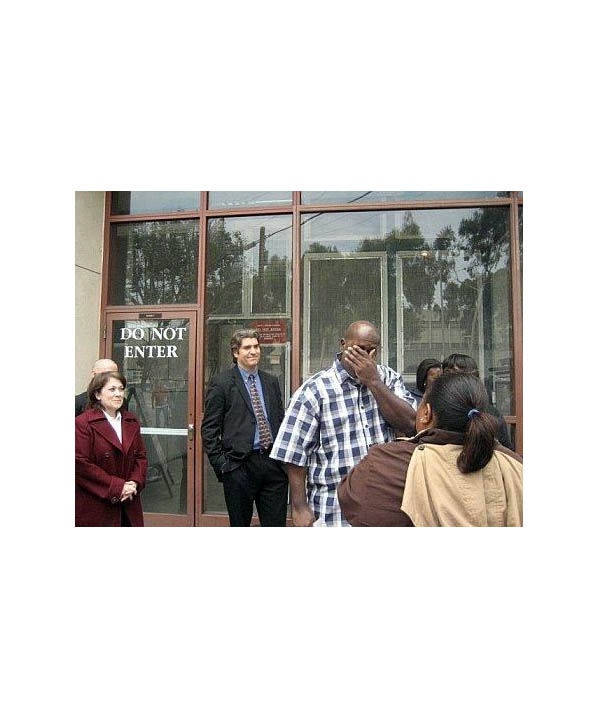
7. Ten years after exoneration, man still not back to normal life. The innocence litigation institute that aided him now shuttered.

http://www.gainesville.com/article/20140216/COLUMNISTS/140219724

==========================================================

SMART ON CRIME PROTOCOLS TO PREVENT FALSE ARRESTS AND CONVICTIONS.

8. First state in US to mandate video-taped interviews for SUSPECTS, not just arrestees.

http://www.dailyjournal.net/view/story/51f5e07f476940a7ab2df25d9327e802/RI–Suspect-Questioning/#.UwJeevldXW8

=============================================================

more later this week.

Posted in AAFS, criminal justice, Forensic Science, National FOrensic Science Commission, Uncategorized, wrongful convictions | Leave a comment

Forensic Focus Picks – ADVANCED FORENSIC REFORM BILL INTRODUCED – Science, News Trends and the Law

The response to my last blog expanding  to multi-disciplinary forensic science topics has been encouraging. Trends are evolving rapidly in the external scrutiny of forensics by media and Congressional/governmental entities. There is still a paucity of forensic research to report here. What I generally find are second and third tier “university” institutions (really just colleges) entering the forensic business via miniscule (compared to real science) grants by NIJ/USDOJ funding.

The TOP headline comes from the US Congress (Senator Jay Rockfeller) new Forensic Reform bill has been announced. His Commerce Committee 2012 Bill held numerous hearings covering many of the subjects and concerns contained in the NAS 2009 “Strengthening Forensic Sciences in the US.” For those thinking that things were slowing down with the launch of the Natl Commission on Forensic Science have to rethink this. Now there are two layers of investigating forensic science working in tandem. See here (the new one) and here (the bill from 2012). 

Nature once again comes up with fundamental review of the P factor used by so many in science and pseudo-science. the topic is its inherent unreliability as statistical proof. A very good read for non-academics. Take it to the bank when you come across some mind-numbing journal article. (Thanks to Nora Rudin Ph.D).

More on “cognitive bias” in subjective forensic analysis (topic: non-metric interpretation of gender and age by anthropologists). It is a template for a generalized look at other “pattern evidence”  like footprints, bitemark gurus,  etc.  (Thanks to Mark Godsey at his excellent blog).

Posted in AAFS, Forensic Science | Tagged , , | Leave a comment

Forensic Focus Picks – Science, News Trends and the Law

What’s trending today. The biggest problem with forensic science is that’s there is almost NO information about research. What you see is what there is.

Fingerprints. French researchers announce much higher resolutions available for physical analysis. They will still need to study the percent chance of false positives. I hope they don’t use the Bayesian Theorem for finding “uniqueness” as a true state of the world’s population.

This Science News article about confabulating uses of statistics follows the above.

Shoe prints considered “distinctive” helped alot by DNA from a cigarette butt leads to a murder conviction in Maricopa County, AZ.

Another reason to doubt TSA assurances. Research indicates airport x-ray scanners are vulnerable to electronic hacking.

Information on how to back out of a TSA security line AFTER YOU FIND A GUN IN YOUR POCKET.

Any NY DA’s misconduct in and out of court no longer subject to civil law suits? This is one judge’s opinion, so don’t over generalize at this point. The opinion doesn’t extend to NYPD as yet. The judge’s rationale has something to do with the City having no influence on the lawyers. Other than PAY THEIR SALARIES.  The idea of negligent supervision of employees apparently just  dissolves when innocent people are wrongfully convicted. Maybe the NY state legislature will pick this idea up and refuse to establish statutory dollar minimums for these folks spending (in many cases) decades in prison. Despite many states establishing some sort of compensation.

Posted in Uncategorized | Leave a comment

FORENSICS | Richardson Bite Mark case exposes ABFO experts’ assurances as folly

The upcoming (next week) American Academy of Forensic Sciences meeting (2014) should result in changes regarding the relationship between the AAFS and the bitemark certifying group. I think their history of bad convictions are finally going to catch up with them via the year long National Commission of Forensic Science scrutiny of the AAFS.

csidds's avatarFORENSICS and LAW in FOCUS @ CSIDDS | News and Trends

Being “tough on crime” is a cliche used by some involved in politics, law enforcement, and used by certain forensic practitioners. I prefer the phrase “smart on crime.”  Both may sound similar, but the “smart” inference means that forensic developments, empirical research and vigorous study of legal outcomes in cases of questionable forensics are now in play. Almost 50% of 311 DNA based exoneration cases have questionable or inaccurate prosecution forensic expertise. These 311 individuals have been represented by the Innocent Project and the Innocence Network. Both are  national litigation and public policy organizations dedicated to exonerating wrongfully convicted individuals by DNA testing and reforming the criminal justice system to prevent future injustice.

This brand new 1/2/2014 article in  THE VERGE focuses on the intersection between two diametrically opposite forensic methods. Its a very good read and details the most recent exoneration of Gerald Richardson via DNA  colliding…

View original post 289 more words

Posted in Uncategorized | Leave a comment

FORENSICS | The Hon. Harry T. Edwards, co-chair of the NAS 2009 report on forensics, speaks to the Commission on Forensic Science

Last week, Judge Edwards had a few comments regarding the tasking challenges facing the newly constructed Committee on Forensic Science. He’s the fellow who has spoken so clearly on the aftermath of the NAS forensic report that voiced scientific disappointment in most things involving forensic science. One exception was DNA when it is properly collected, described and processed. One must remember that DNA profiling was a previous NAS topic about 20 years ago which, at the time, was struggling with a bit of technical shoddiness and roiling over what statistical studies should be incorporated in rendering its powerful  effects on forensic identification.

He takes a historical approach, based on his own experiences on the subject matter of the commission goals . He is not just an exalted resident of hallowed appellate halls. He may even read some Law Review articles. (Inside lawyer joke). Here is the lead line for his presentation to the 35 member commission. I am sure they were paying attention.

Reflections on the Findings of the National Academy of Sciences Committee on Identifying the Needs of the Forensic Science Community

Here are a few excerpts:

1) His overview on NAS 2009 will sound familiar to those following forensics.

“On February 18, 2009, the NAS Committee published its final report. We concluded that, “[w]ith the exception of nuclear DNA analysis, . . . no forensic method has
been rigorously shown to have the capacity to consistently, and with a high degree of certainty, demonstrate a connection between evidence and a specific individual or source.”
Our report also documented: ”

To keep this next short, I will give a statistical analysis on the adverbs and adjectives they used 5 years ago.

“Paucity” (2x). Topics: [of] research, validation, and observer errors and bias.

“Lack” (2x). Topics: [of] autonomy and transparencies and oversight in crime labs. (go to @csidds on Twitter for some of this). The Boston crime lab denials continue.

“Absence” (2x). Topics: [of] mandatory practitioner and rigorous laboratory accreditation.

“Failure” (2x). Topics: [of] forensic practitioners. No robust performance standards, terminology, report writing, and testifying.

“Gross” (1x). Topics: shortage of training that addresses all of the above.

I am not going to summarize the rest of his 8 page (with endnotes) public comments. It may have taken him 5 minutes in total. But his keywords (along with some of my editing) you should look for are:

KEYWORDS AND PHRASES: Hope that the commission moves forward with NAS 2009 lead; the commission is qualified; he regrets there is no governmental entity which would mandate forensic reforms and focus research progress; real science must help forensics; the courts are no answer to scientific advancements; case precedents control; gatekeeping by judges is a misnomer; he gave numerous recent examples of inadequate and muddled legal thinking on forensic methods; forensic experts’ false positives, negatives and error rates (from Fed court in Daubert; 1993) are of slight concern to the judiciary; some call the Daubert standard “flexible.” (Sounds like a lawyer to me. I’m glad the medical profession doesn’t review its therapeutics with such dissembling. As in “Doctor, my arm hurts when I move it’ with the physician then saying, “Well then, don’t move your arm. You owe me $5.” Thanks to Rodney Dangerfield).

Here is the Hon. Harry T. Edwards. http://www.law.nyu.edu/sites/default/files/EdwardsSpeechtoNCFS.pdf

Posted in Forensic Science, junk forensic science, National FOrensic Science Commission, wrongful convictions | Tagged , , | Leave a comment

Bitemarks and Wrongful Executions: Law Prof Considers the Connection

A law professor has an impressive blog post that elaborates on the dangers of bad forensic science leading to executions of innocent defendants.  Read it here. He also has a few things to say about bitemark identification. A recent bitemark case interests him and he’s got some  points similar to mine. A synopsis of my bitemark travels follows below. I wish I could find a prosecutor with enough savvy to figure this stuff out and be just astute enough to be reasonable about it. One must go to Australia to find a judiciary that has learned from its mistakes  (starting in 1986).

I have been involved in multiple cases where bite mark identification was admitted by prosecutors  as “scientific” evidence to convict. Many have been at the trial court level where I have opposed the “elite” members within the forensic bitemark association connection,  AAFS/ABFO. I have been of some aid in exoneration litigation resulting in the the release of eight innocent men. Others are still in prison because of bitemark opinions.

Until 2012, I had also been a “Diplomate” (certainly an impressive title)  of the ABFO, (for 22 years; I actually had a 4 or 5 year tenure on their Exam and Certification committee and a couple terms on their board of directors) and as such,  I was opposing dentists within my own (small) organization which still “certifies” its applicants as peer-reviewed forensic dental examiners. It was dicey to say the least for some of my collegial brethren. Within all these years, I have never opposed any report or testimony involving human identification via autopsy exams and dental records (i.e., dental identification). I oppose bitemark evidence used to convict in courts. See Bowers

I voluntarily resigned from the ABFO almost exactly two years ago. Let’s just say that the ABFO leadership (but not necessarily all its 90 members) and I had never seen eye-to-eye for about 17 years. There is a chronology to this. It started here. And to this (Chapter 37, co-authored with UCLA Professor Jennifer Mnookin, previously by ASU Professor Michael J. Saks; since 2000).Then onto the  NAS, as reviewed by the Innocence Project in 2009. The NAS report section on bitemarks cited my meta-data research on combination DNA and bitemark cases).  There is more:  this and especially this.

The back room rancor (which now has become front room ) caused by my very public position regarding the dangers of their continuing  proclamations of reliability finally erased my philosophy of “working within the organization” to encourage professional self-assessment of all their alarming “bad cases.”  My technical writing suggested pulling back from the “gray-beards” who, in the 1980’s, used their ground-breaking criminal cases (try Ted Bundy for the best known case and many less news worthy bitemark cases) which most of them proudly labeled “the first case of bitemark evidence in the State of _______.” You can add your own state in the blank. All 50 still allow these methods into court. About 1/3 use the outdated Frye Rule from 1923 and the rest use Daubert from 1993. Both say if there is a “general acceptance” by “relevant” practitioners then its good enough for the courts.  Apparently the NAS isn’t scientific enough. Don’t expect trial judges to separate the scientifically substandard offerings of the ABFO experts. They were liberal arts majors before law school and think (shudder) like lawyers. They love to argue hypotheicals  ( i.e. what if?) rather than science (double shudder). Judges HATE to get reversed on appeal and therefore stay within boundaries from previous case acceptance of bitemarks. Their selectivity ignores 24 erroneous convictions and arrests substantially aided by pro-prosecutorial bitemark evidence.

I have kept my membership (for 30 years now) in the AAFS as a “Fellow” as it contains multiple forensic disciplines that honestly  work on making their forensic services reproducible and meet the demands of better scientific methods head on. I  particularly applaud the forensic anthropology section of the AAFS for their recent review and publication regarding certain cranial (skull) landmarks that are not reliable as a basis for complete  indentification. They did this as a group project ( 101 members) and by committee (within the AAFS and their certifying board, the ABFA , which reached a general consensus.  These landmarks had been used for decades yet they didn’t flinch to investigate their own work. Bravo for them.

My ex-forensic dental group, the ABFO can’t hold a candle to them. The current ABFO president, a Peter Loomis, remarked (in part) in a recent Nature article that bitemarks on skin are still useful to identify the differences between dog bites and a human bite. Speaking of disorganization, they many times they can’t reliably agree what is a bitemark in court.

I have no idea why he didn’t say, “injuries on victims of violent crime that appear to be bitemarks should be analyzed for residual saliva DNA. Bitemarks and overlaying garments are excellent sources of DNA. This DNA, if properly collected and processed, may lead to the identification of the perpetrator.”

Posted in AAFS, ABFO, Bad Forensic Science, Bitemarks, Forensic Science, National FOrensic Science Commission, wrongful convictions | Tagged , , , , | 3 Comments

FORENSICS | Nature (prestigious science magazine) releases “Faulty Forensics Under Fire” about Bitemark Unreliabilty

The Nature piece starts with this picture and a following caption. 

Monster teeth

“There is little evidence that bite marks on a crime victim’s skin allow reliable identification of the perpetrator.”

For those who think the National Commission on Forensic Science is not looking at  odontological (i.e. Euro-speak for dentistry ) aspects of “forensic”  bitemark identification, here’s another dose of reality. Although the Commission has no dentist on its elite panel,  I submitted a series of comments for their consideration on the topic, because  one explicit task of their’s IS to review (forensic) odontology. (See, Bowers)

I doubt the major aspect of odontology (which is human identification from autopsy dental exams and then  compared to old dental records) will raise any concerns. Those pro-bitemark survivors (approx 100 continuing to be “certified” by the AAFS/ABFO Connection) should note their meager efforts to marginalize the NAS and other criticisms  as “misinformed”, are failing and does not chill decades of professional and media dissent. It  will NOT work with this Commission.

The following links  are  broader views of opinions relating to forensic science. Besides what I have talked about in the past on this blog, better minds have been following the topics of wrongful convictions. These often contained sloppy, overvalued or invalidated forensic disciplines. The Innocence Project (312 cases)  indicates this happens in about 50% of the time. The National Registry on Exonerations (with a caseload of over 1300) publishes a lower percentage. All of these engined the creation of this Commission.

Two other public interest views (from the news media apparently still  mis-informed according to the AAFS/ABFO brain-trust) I have chosen are 1) this week’s piece from the prestigious weekly scientific publication Nature Magazine where I got this blog’s lead line and 2) the Washington Post which is titled “What does a record number of  exonerations in 2013 tells us”    by Radley Balko.     

Posted in AAFS, ABFO, Bitemarks, Forensic Science, National FOrensic Science Commission, wrongful convictions | Leave a comment

FORENSICS | Review of questionable research on bite marks. US taxpayers’ $715,000 funded it.

In a recent post, I promised to do a review of this promised-to-be-published “paradigm proof” from a Marquette University news release which revealed a “silver bullet” forensic cure to bite marks’ spotty history. The caption for the news release is eye-catching:

“Work will help establish protocol for using bite marks as forensic evidence “

Here are more declarations.

“will help establish protocol for using bite marks as forensic evidence” and that it would “determine whether bite-mark patterns have evidentiary value in criminal investigations.”

Neither of these claims, above or below, are addressed or established in the final report.

“The group’s findings have demonstrated that bite patterns can sometimes be recovered from skin and correlated with a high degree of probability to a member of the population – a significant step forward for forensic odontologists who have long been challenged on the scientific legitimacy of bite mark analysis.”

Furthermore the press release states that the study

 “will also provide a template that enables imaging specialists to evaluate and rank bite patterns against a benchmark to determine their evidentiary value.”

 There is no mention of such a benchmark in the final report. And many oddly placed disclaimers:

“But Johnson cautions that such patterns cannot be used as an identification to the exclusion of all others.” (sic)

“It’s not identification where you’re individualizing,” Johnson explained. “It’s showing that certain characteristics of teeth are outliers, and when you see one of these,                          you can eliminate a great percentage of the population. And if you see a second one, or a third one, then it’s not likely that very many people in the world are going to                    have teeth like that.” (sic)

“The study is meant to augment the established guidelines of the American Board of Forensic Odontology. It should not be used in testimony or legal proceedings”  (Page 18)

Here’s my preliminary comment. “Caveat emptor.” In the above quotations, the news release and the primary author’s jumbled terminology and logic sets the stage for this review.

“Identification,” in forensic science, can only be done by methods that confirm an object of evidence can be sourced to its origin. Think of DNA profiling and fingerprints (with a few mistakes of their own).

“Seeing” a population cohort with “only one or two or three” dental “outliers” (meaning crooked teeth, I suppose) is no proof human skin will reliably reflect this “rare” (using their terms) arrangement. It fails to establish a clear means of how to control mismatches (more on that below). The reporters also want government managed crime labs to take this pig skin study (“the platform”) and rerun their own experiments using their “template.”

So, here’s their evidence for those interested in reading 104 pages of hyperbole. It also is asking for additional funding of a “bite mark database.” This would be akin to the FBI’s successful FDDU (Federal DNA Database Unit). Please help us all. Highlighted_Johnson_Radmer_NIJ_2010-DN-BX-K176__10_13_13 (5)

A brief overview about forensic science research and academic standards

Progress in our popular concepts of scientific advancement is the meat of books, movies, school history lessons and exhibitions within major museums and universities. Forensic science has a significant footing in crime, murder and mayhem fiction from such notables as Edgar Allen Poe, Mary Shelly, Arthur Conan Doyle and more recently Patricia Cornwell and Kathy Reichs.

Has anybody written about botched forensic lab experimentation and misleading press releases?

Of course. The years long flap about “hair matching” and “bullet lead matching” of the FBI is still bouncing around in some of our brains. Maybe the newly formed National Commission on Forensic Science can deconstruct the bad management and bogus research that led to almost 20 years of junk expert testimony in thousands of criminal cases. Then maybe the lawyers in the NCFS can comb the judicial record and find out how trial judges and appellate panels allowed acceptance of the hair and bullet experts over the objections of the defense bar and a lot of bad press.  This might result in preventive measures being recommended by the Commission and globally applied (via an enforceable mandate) across this nation’s law enforcement affiliated crime labs and their certifiers such as the ASCLD (and a few others).

History, in its looking backwards, tends to smooth over the bumps in the roads of real world of science in such a way as to portray it ascending upwards or at least forward. But, that’s not the entire reality. Science does develop from ideas, suppositions, personal observations and, in the academic environment, experimentation and publication. Publishing is the heartland for professors to advance to glory or as in this case, redemption. This last part about publication has a nasty side worth short discussion. No one less than Randy Scheckman, a 2014 Nobel Laureate in physiology or medicine, used his award to mention his take on some “behind the scenes” in journal publishing.

Leading academic journals are distorting the scientific process and represent a “tyranny” that must be broken, according to a Nobel prize winner who has declared a boycott on the publications.

Also…

A journal’s impact factor is a measure of how often its papers are cited, and is used as a proxy for quality. But Scheckman said it was “toxic influence” on science that “introduced a distortion”. He writes: “A paper can become highly cited because it is good science – or because it is eye-catching, provocative, or wrong.”

His statements are surely polarizing, and not on point with this blog’s issue, but they ring true. If you remember about “cold fusion.” As I said earlier, science isn’t inviolate, its progress can be choppy and some peer reviewers may not have sufficient grounding in all the myriad specialties in the VERY specialized sciences of today.

Philip Campbell, the editor-in-chief for Nature, later countered with….

“We select research for publication in Nature on the basis of scientific significance. That in turn may lead to citation impact and media coverage, but Nature editors                                   aren’t driven by those considerations, and couldn’t predict them even if they wished to do so,” he said.”

Cold fusion might have been ultimately ridiculed but it’s the process of its being “ruled out’ was a good corollary about the scientific method. The initial claim was written in such a way to allow “replication” or “validated” by independent institutes, universities and legitimate researchers. This is the “communalism” of science. It’s a sharing process. A paper claiming first rights to something “good” presents sufficient testing design, instrumentation use, data collection and analysis that represents what is the basis of the research claims. Then there is the questionable side of research.

Please put on your “critical thinking hat.”  Any report consistently containing data representation must be proven to be intentionally inaccurate and patently misreported. There is no evidence that this has ever been proven or ever led to a finding of misconduct. In no, way am I affirming anything in that regard. But, in arguendo, academics do consider it data suppression—the failure to publish or discuss significant findings due to the results being adverse to the interests of the researcher or his/her sponsor. Within this are bare assertions– making entirely unsubstantiated claims.

Review of “Replication of Known Dental Characteristics 1 in Porcine Skin: Replication of Known Dental Characteristics in Porcine Skin: Emerging Technologies for the Imaging Specialist”

In the press release for his $715,000 three-year study, Dr. LT. Johnson states that this work will further the scientific basis for bite mark analysis – his actual final report, that describes the project and the results, paints a very different picture.

This study actually found that:

1.) It was difficult to create a bite mark suitable for analysis almost 50% of the time.

2.) There was an incredibly low accuracy rate of determining the actual biter

3.) There were a large number of false positives

Let’s look at the points in a little more detail:

1.)      This study demonstrated that bite marks cannot be reliably created even under ideal laboratory conditions –with enough fidelity suitable for research analysis almost 50% of the time. Out of the 200 bite marks created only between 43.5% and 58% had sufficient detail such that they could be used. (Page 13).

Thus with an anesthetized pig, which is not moving, and a mechanical jaw, which does not possess the complexity of a true human jaw, good quality bitemarks could not be produced on many occasions. One must wonder what the quality of the evidence would be in a far less conservative situation during a violent altercation.

In other words, ‘real life’ bitemark analysis would have an even worse error rate.

2.)      Fifty plastic models of dentitions were created. Each model was used to make four bites in different locations on twenty-five pigs, totaling two hundred bites.

Note that the sample size is N=50 bites, with 4 replications, it is not N=200. (Page 1)

It is not disclosed whether any of the correct bitemark/dentition assignments were replications (which would worsen the results).  For example, if a particular dentition had a feature that made it easier to match such as a missing tooth, up to four replicated bitemarks might have been reported as matches to a single dentition.

A software tool was used to measure the position of the front four teeth in the bitemarks. These measurements were then compared to 469 measurements of dental models, in an effort to match models to bitemarks.

Two examiners analyzed the bitemarks. Examiner 1 was able to rank 5 out of 143 bites as number 1 and Examiner 2 was able to rank 2 out of 156 as number 1. That is a 0.035% and 0.0128% accuracy rate respectively. (Page 2) Again it is not mentioned if any of these matches were replicates from the same dentition.

The data indicate that it was next to impossible to correctly identify the biting source.

3.)      Images were then ranked in the top 1%, 5%, and 10%.  The only relevant data here is selection of the correct specimen, however. If other specimens are ranked within the top percentiles, then this research shows that there are significant chances of both false negatives and false positives, i.e., other models fit the bitemark better than the target. False positive rate is not reported in this study, although this obviously occurred. (Page 15).

Here is a summary of the ranking stating:

“in more than 20% of the Samples in this study, the Distance Metric Model finds the Target within the closest 5% of the Population. In more than 6% of the Samples, it finds the Target within the closest 1% of the Population”

Put another way, in 80% of the samples in this study, the model could not find the target within the closest 5% of the population, and in 94% of the samples the target could not be found within the closest 1%.

Summary:

This is the largest bitemark study yet performed on living organisms confirms that bite mark analysis is still notoriously unreliable.

Their null hypothesis states: “It is not possible to replicate bite mark patterns in porcine skin, nor can these bite mark patterns be scientifically correlated to a known population data set with any degree of probability.”

The null hypothesis has been proven. The data supports it. This methodology should not be accepted, nor replicated by anyone. The real egregious oversight in this paper is its silence (i.e. omission) about false positives (causes of wrongful convictions: bad for the public’s trust in criminal justice) and false negatives (bad for public safety).

Posted in AAFS, ABFO, Bad Forensic Science, Bitemarks, Forensic Science, junk forensic science, National FOrensic Science Commission, wrongful convictions | Tagged , , , , , , | 1 Comment

FORENSICS | National Commission on Forensic Science Publishes Bowers’ Comments on Bite Mark Accreditation

On Friday, January 31, 2014, the NCFS published their agenda for its one and one-half day meeting starting next week.  The Commission allowed public comments regarding the panel’s tasks and accepted  C. Michael Bowers DDS JD documentation regarding the status of bite mark identification and its accreditation agencies, the American Academy of Forensic Sciences and the American Board of Forensic Odontology.

The agenda is here.  Use Conference Code 2014-103P .

Documents incorporating my public comments are here. Bowers

Posted in AAFS, ABFO, Bite Marks, Bitemarks, exoneration, Forensic Science, junk forensic science, National FOrensic Science Commission, William Richards Exoneration Case, wrongful convictions | 2 Comments

FORENSICS | THE SILVER BULLET? : $715,000, three year long research project promises to support admissibility of BITE MARK IDENTIFICATION

Too bad the chief investigator has a history of being involved in the wrongful conviction of  Robert Lee Stinson in WI. He reports (with other contributors, all are Marquette University faculty; mostly dentists)  results that support the bite mark “match” he presented in Stinson’s 1986 conviction may still be accurate and compelling evidence of Stinson’s continuing guilt. Seems odd to me, since this defendant (now exonerated and suing them in federal court) was presented as the only suspect at the original trial. But, as history tells us, rationales are not necessary rational. Dentist and lawyer support a NEW THEORY that the post conviction DNA obtained by the Innocence Project’s litigators now confirms that “there were two perps” committing the crime, thereby leaving Stinson still guilty. One must strike when the opportunity occurs to rehabilitate oneself. Their opportunity was to get the National Institute of Justice to fund research over the last few years. They now claim a “silver bullet victory” on their own behalf. Like the Lone Ranger and Tonto, they have completed the funding required research ending report. I obtained a copy from the NIJ. See attached. This will lead to their most likely getting it “professionally published” (this assumes additional peer review beyond the NIJ) in a fingerprint, ballistics and crime lab journal.   The NIJ has no scientific staff who are forensic dentists (it relies on volunteer reviewers). Since the funding and previous publication (of their initial research goals that claimed clear confidence of success) ultimately came through their association with the fingerprint journal, its hard copy is likely to show up there. This journal’s parent org is the International Association of Identification. Out of its thousands of members, there are 3 dentists. The forensic dental contingent is composed of: 1) the chief investigator of the paper, 2) a dentist who has been involved in two wrongful convictions via the use of his (he later admitted his mistake in the press) erroneous bite mark opinions, 3) and myself. One last observation: The 2014 news release claims to have solved all ( in one swoop) the questions dogging bite mark advocates for decades. Considering the time gap from bite marks’ first introduction in US Courts (1954) to 2014, the paper’s grandiose claims, merely on their face, reinforces the fact that the bite mark community has been flying blind for about 60 years. The creation of the new National Forensic Science Commission now permits this “elite forensic group” ( as stated in the Press by the American Academy of Forensic Sciences) the opportunity to review all the previous case history on the use of bite mark “science.” Maybe this new report is not such a “silver bullet” after all. THE MERITS (if any) AND FAILURES (many) of the Report will be forthcoming in a future blog. Johnson_Radmer_NIJ_2010-DN-BX-K176__10_13_13 (2)

Posted in AAFS, Bite Marks, Bitemarks, National FOrensic Science Commission | Tagged , , , , , | Leave a comment