US judiciary has blinders on when its allows egregious use of junk experts regardless of Constitutional protections

Image result for free blind justice

Even when exoneration cases have proven forensic experts wrong (the first 200 exons had a 57% error rate of the participating forensic types :Brandon Garrett, Judging Innocence, 108 COLUMBIA L. REV. 55, 107 (2007)), the US courts’ reliance on precedent cases versus upated data-driven scientific proofs continue to lay waste (actually they avoid to recognize) Due Process clause protections of the US Constitution. As in any disease or harmful process, the cure is often tougher than a few ounces of prevention. Worse stages of disease require much more. To continue this allegory to its legal source, the US courts are practicing an antiquated version of British Common Law that isn’t keeping up. The scientific evidence Frye Rule is from 1923 and is a core component in current similar iterations.

Science is banging up against legal inertia (i.e. the tendency for objects to resist outside force and keep on what they are doing, either to stay at rest or keep moving).

In addition, the cobweb of multi state cases accepting faulty science are so intertwined as to be…. for lack of a better word, endemic.

One example:  With respect to death penalty cases alone, at least fifteen convictions where bitemark evidence not only played a key role in the prosecution, but also, as in Stinson (WI) and Brooks (MS) (2 bitemark exonerations) , the cases rely mutually on each others’ flawed acceptance of the pseudo-science to justify the convictions.

Here’s are quotes from  “shifted paradign in forensic science” that uses a different context.

“This kind of self-serving, court-facilitated pseudo-jurisprudence not only facilitates trial courts’ wholesale admission of flawed evidence; it also insulates such decisions from appellate review, no matter how legally indefensible and intellectually dishonest. Post-conviction courts, moreover, typically avoid any rigorous analysis of a discipline’s validity or of the propriety of a trial court’s admissibility decision by invoking procedural bars.”

The focus become sharper when the current appellate review of junk-science caused convictions is laid out for all to see.

“……for example, post-conviction courts’ review was primarily focused not on substantive analysis – even cursory – of fire science, but, instead, but on procedural hurdles that Lee’s [ convicted of arson and murder by junk fire “science” ] request for post conviction relief were required to overcome in state and federal habeas corpus litigation. After a lower court declined to address the scientific legitimacy of the fire science, Lee was denied review because his “claim of newly discovered evidence [that the fire evidence was not based on sound science] is not cognizable under § 2254 [state remedies in federal court] because claims of actual innocence based on newly discovered evidence are never grounds for federal habeas relief absent an independent constitutional violation.”

[Lee v. Tennis, No. 4:08-CV-1972, slip op. at 1 (M.D. Pa. June 13, 2014).. The court cited Herrera v. Collins, 506 U.S. 390 (1993) for the proposition that “[c]laims of actual innocence based on newly discovered evidence have never been held to state a ground for federal habeas relief absent an independent constitutional violation occurring in the underlying state criminal proceeding . . . . This rule is grounded in the principle that federal habeas courts sit to ensure that individuals are not imprisoned in violation of the Constitution-not to correct errors of fact.” ]


Posted in Uncategorized | Tagged , , , , | Leave a comment

Another Amazing Story of Texas Justice being Brought to Task by DNA and Evidence Destruction

kerry max cook

Years after being freed from death row, East Texas man fights to clear name

This story is decades long and runs from Dallas, the Texas Monthly, Smith County Texas to New York and back. Now its all about motions for a new trial in the same county (Smith) where the misconduct accused ex DA now judge presides.

First off: http://www.dallasnews.com/news/crime/headlines/20150914-east-texas-man-freed-from-death-row-fights-to-clear-name.ece

Here’s more: 

The [legal] papers also point to powerful new evidence that officials in Smith County, Texas, withheld favorable evidence to secure Mr. Cook’s 1999 “no contest” plea to murder (a highly unusual plea that required no admission of guilt and permitted Mr. Cook to maintain his factual innocence), and ordered a piece of highly probative evidence destroyed shortly after the state adopted a DNA testing law giving Mr. Cook the ability to request testing of the item for the purpose of securing his full legal exoneration.

Here’s more:

In light of this evidence, the Innocence Project has filed a motion before Smith County District Judge Christi Kennedy asking that she recuse herself from the case because of her close relationships with several of the prosecutors and judges who are alleged to have committed misconduct against Mr. Cook over the course of 38 years, three capital murder trials, and in the legal proceedings surrounding Mr. Cook’s no contest plea.  One of those officials, former elected Smith County District Attorney Jack Skeen, led the prosecution team seeking Mr.  Cook’s execution for more than 15  years; Skeen is now a judge on the same Smith County District Court as Judge Kennedy, which consists of only four judges.  The motion notes that judges in Texas and nationally regularly recuse themselves or are ordered to be recused from such cases, given the inherent difficulty in fairly resolving allegations of a fellow judicial colleague’s misconduct.

Another news article going further in the Innocence Projects filing in this case.

“Four Decades, Three Trials, Two Death Sentences, One Exoneree. Almost.” 

Thanks to the Innocence Project of Texas and NY. 


Posted in Uncategorized | Tagged , , , , | Leave a comment

More on fire science and the Scientific American article “Can we trust crime forensics”

One Response to
John Lentini says:
September 15, 2015 at 8:49 am
Dr. Shermer attended a meeting that was intended to focus on problem areas in forensic science. So it is no surprise that he can tell us about the flaws that we discussed at the meeting. I think, however, that he over-generalizes the problem in this SA article. Not all of forensic science exhibits the same problems as bite marks and fire investigation, and that point was made clear at the meeting. Perhaps he was out of the room at that point. Dr. Victor Weedn, President of the AAFS, has sent a reply to SA. It remains to be seen if SA will publish it.

csidds's avatarFORENSICS and LAW in FOCUS @ CSIDDS | News and Trends

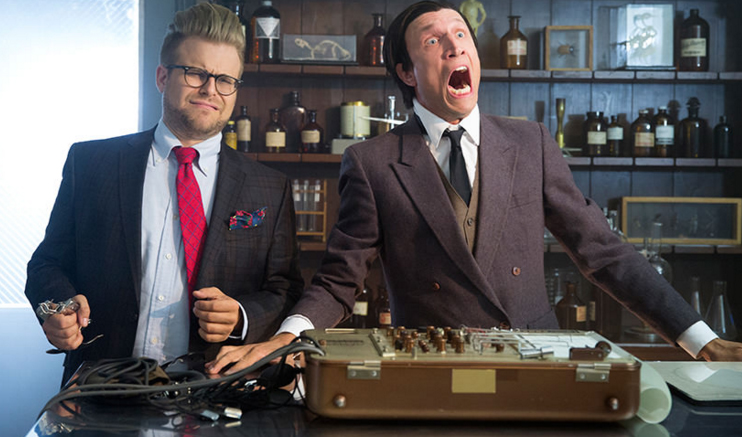
A FLAMIMG MAGICIAN DETECTING THE REAL CRIMINAL (NOTE THE DISPARATE PARTICIPANTS OF THE LINEUP). From the Scientific American Aug 18 2015

The bloom is certainly off the flower, when the SA starts publicizing the mythologies contained in the corners of forensic expertise.

Can We Trust Crime Forensics?

How trustworthy are DNA and other crime scene tests?

The criminal justice system has a problem, and its name is forensics. This was the message I heard at the Forensic Science Research Evaluation Workshop held May 26–27 at the AAAS headquarters in Washington, D.C. I spoke about pseudoscience but then listened in dismay at how the many fields in the forensic sciences that I assumed were reliable (DNA, fingerprints, and so on) in fact employ unreliable or untested techniques and show inconsistencies between evaluators of evidence.

The conference was organized in response to a 2009 publication by the National Research Council entitled Strengthening…

View original post 420 more words

Posted in Uncategorized | Leave a comment

Can We Trust Crime Forensics?

A FLAMIMG MAGICIAN DETECTING THE REAL CRIMINAL (NOTE THE DISPARATE PARTICIPANTS OF THE LINEUP). From the Scientific American Aug 18 2015

The bloom is certainly off the flower, when the SA starts publicizing the mythologies contained in the corners of forensic expertise.

Can We Trust Crime Forensics?

How trustworthy are DNA and other crime scene tests?

The criminal justice system has a problem, and its name is forensics. This was the message I heard at the Forensic Science Research Evaluation Workshop held May 26–27 at the AAAS headquarters in Washington, D.C. I spoke about pseudoscience but then listened in dismay at how the many fields in the forensic sciences that I assumed were reliable (DNA, fingerprints, and so on) in fact employ unreliable or untested techniques and show inconsistencies between evaluators of evidence.

The conference was organized in response to a 2009 publication by the National Research Council entitled Strengthening Forensic Science in the United States: A Path Forward, which the U.S. Congress commissioned when it became clear that DNA was the only (barely) reliable forensic science. The report concluded that “the forensic science system, encompassing both research and practice, has serious problems that can only be addressed by a national commitment to overhaul the current structure that supports the forensic science community in this country.” Among the areas determined to be flawed and in need of more research are: accuracy and error rates of forensic analyses, sources of potential bias and human error in interpretation by forensic experts, fingerprints, firearms examination, tool marks, bite marks, impressions (tires, footwear), bloodstain-pattern analysis, handwriting, hair, coatings (for example, paint), chemicals (including drugs), materials (including fibers), fluids, serology, and fire and explosive analysis.

Take fire analysis. According to John J. Lentini, author of the definitive bookScientific Protocols for Fire Investigation (CRC Press, second edition, 2012), the field is filled with junk science. “What does that pattern of burn marks over there mean?” he recalled asking a young investigator who joined him on one of his more than 2,000 fire investigations. “Absolutely nothing” was the correct answer. Most of the time fire investigators find nonexistent patterns, Lentini elaborated, or they think a certain mark means the fire burned “fast” or “slow,” allegedly indicated by the “alligatoring” of wood: small, flat blisters mean the fire burned slow; large, shiny blisters mean it burned fast. Nonsense, he said. It may take a while for a fire to get going, but once a couch or bed burns and reaches a certain temperature, you are not going to be able to discern much about its cause.

Lentini debunked the myth of window “crazing” in which cracks indicate rapid heating supposedly caused by an accelerant (arson). In fact, the cracks are caused by rapid cooling, as when firefighters spray water on a burning building with windows. He also noted that burn marks on the floor are not the result of a liquid deliberately poured on it. When a fire consumes an entire room, the extreme heat burns even the floor, along with melting metal and leaving burn marks under a doorway threshold, which many investigators assume implies the use of an accelerant. “Most of the ‘science’ of fire and explosive analysis has been conducted by insurance companies looking to find evidence of arson so they don’t have to pay off their policies,” Lentini explained to me when I asked how his field became so fraught with pseudoscience.


Posted in Uncategorized | Tagged , , , , , , , | 3 Comments

DNA tech’s reference semen DNA or sloughed skin shows up in 2014 super sensitive profile of 1984 murder case

Police used a lie detector on an over cooperating retired crime lab tech to concoct a “confession” that is nothing of the sort. This story is dominated by overarching confidence from San Diego law enforcement that “DNA always gets our perps” which ignores common sense and known facts of how sloppy labs were in the 1980’s. They trashed the retiree who recently committed suicide. His wife has filed suit to uncover the “now closed” police investigation. From The Atlantic.


Posted in Crime, criminal justice, CSI, DNA mixtures | Tagged , , | Leave a comment

“New” FBI DNA stats changes likelihood of mismatch frm 1:Billion to 1:100

Earlier this year the feds said revamped stats of DNA mixtures would make nary a blip in final crime lab results. Texas DPS found that to be a mega overstatement. The product rule strikes again. 

Texas DNA results

Posted in CSI, DNA mixtures, DNA profiling, Forensic Science | Leave a comment

Sept 16 2015 The “bite mark magicians” take on the TX Forensic Sci Comm

No consequences for bite mark experts helping convict innocent defendants.

Posted in Uncategorized | Leave a comment

175 innocent men have been on death row in the US

Read about Richard Glossip in Oklahoma. 

http://www.innocenceproject.org/news-events-exonerations/barry-scheck-urges-oklahoma-governor-to-stay-glossip-execution

Posted in Uncategorized | Leave a comment

TX lady prosecutor denies failures to follow Brady rules, stating nothing withheld was exculpatory

Now, should we believe her? Her conviction case was remanded for a new trial. Of course the DA’ s office is appealing the lower court’s judgement of wrongdoing.

Her admitting that material was withheld from the defense in the original murder trial lends some figment of suspicion. A judge agreed with the defense motion citing 38 instances of misconduct.

Full story.


Posted in prosecutorial misconduct | Tagged | Leave a comment

8 exonerees’ first days of freedom

  
Learn from this glimpse into the lives and experience of returning to society after years in prison. 
First days of freedom

Posted in Uncategorized | 1 Comment