A lesson about scientific proofs vs. “causation beliefs” use in courts

This written appellate opinion sums up the challenge of “gatekeepers” (the judges) at the trial level filtering out expert witness bombast of opinion from actual scientific “causation.” The bombast in the forensic field of testimony can be seen in the hair, bitemark, psych profilers, bullet lead matchers, and not a few rogue blood pattern reconstructionists.

Here’s the clear distinction courts should conceptualize: (It’s in the last sentence).

Of course, its a Canadian court. 

Thanks to Emma Cunliffe at UBC. 

Posted in AAFS, expert testimony | Tagged , , , | Leave a comment

Retribution in criminal justice reform

“In (the) battle over Nebraska’s death penalty, victims’ families refuse to be political pawns” by @lilianasegura at The Intercept. 

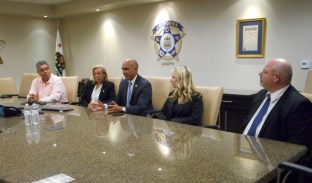
This parallels California’s upcoming vote to abolish the death penalty. There probably will also be a pro-death penalty measure on the Nov 18th ballot. There are 743 on death row. DA’s continue to support it as a deterrent and a form of “closure.” In days gone by, and currently, executions are reserved for the “worst of the worst” according to San Bernardino DA Mike Ramos in 2015. (Center, in the above picture). He echoes the Nebraska pro death penalty pushback via talking about the victims’ families needing some type of relief.

This article from the Intercept considers the alternative approach to capital punishment which is life in prison, inmates working full time, and financial restitution to victims’ families for wages.

My stake in this debate is the documented number of innocent exonerees who were on death row. In 2015, 6 men were released from prison after death sentences having been rigorously opposed by prosecutors such as Mr. Ramos. Nation wide, the numbers are substantial.  False or misleading forensic experts are statistically significant factors.

“Today Kelle ( murder victim’s sister who opposes the death penalty in Nebraska) criticizes the way politicians treat grieving families like political pawns, “putting you on a chessboard to their advantage.” If you agree with the state, they’ll support you at trial and beyond, she said. But if you stand up against executions, “all of a sudden, along comes the big King, or in our case, Governor Ricketts, [to defeat you]. And that’s really very disheartening when you work so hard and it costs so much emotionally to do this work.”

https://theintercept.com/2016/06/20/in-the-battle-over-nebraskas-death-penalty-victims-families-refuse-to-be-political-pawns/

Posted in AAFS, death penalty, exoneration | Tagged , , | Leave a comment

Shaken baby assumptions at the core of scheduled Texas execution

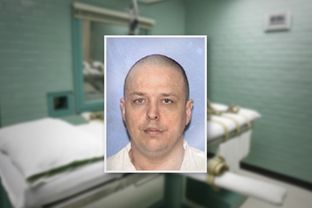
Robert Roberson III is a Texas death row inmate.

The case of a soon to be executed Texas inmate shows how in 2002 “shaken” baby injuries were taken as a given by both prosecutors and defense attorneys. Even after Robert Roberson’s conviction in 2002, his appellate counsel didn’t take exception to the fact that Roberson murdered his 2 year-old child. They argued mitigation of guilt based on Roberson’s diminished mental capacity and ineffective assistance of counsel from a “conflict.” The forensic testimony remained untouched. The effect of forensic testimony ruled the courtrooms and chambers of justice.

That’s changed at this late phase as last minute motions have created a stay to the execution.

Its all about the SBS “triad” of symptoms that have been popularized for decades without consideration of false positives, tunnel vision and over-reaching conclusions.

“Backed by affidavits from medical and other scientific experts who reviewed the case, Roberson’s team argued in the stay request that Nikki did not have a broken neck, an injury often tied to Shaken Baby Syndrome.”

“Experts, his defense counsel and the district attorney’s office did not take seriously Roberson’s claim that Nikki fell,……….”

Texas Tribune


Posted in Uncategorized | Tagged , , , , | Leave a comment

Obstinate Prosecutor pursues new trial in Richards case despite forensics of innocence

New info on DA ignoring new evidence and heading to a 5th Richards trial. “It’s absolutely stupid.” @chronic_jordan https://theintercept.com/2016/06/16/its-absolutely-stupid-fifth-trial-planned-in-bite-mark-murder-case/

csidds's avatarFORENSICS and LAW in FOCUS @ CSIDDS | News and Trends

Prosecutors have been well described in the media as “dogged’ and “relentless” by exerting punishment and retribution for crimes large and small against our citizenry. But there is a factual line drawn where cases of legitimate doubts are brought forward in post-conviction proceedings which do overturn convictions.  For example, doubts about forensic mishandling and inept methods and new exclusionary DNA evidence paid for by the State of California should carry alot of weight to overturn a conviction. The US record number of 1831 exonerations also indicates that innocence proceedings have been successful, in part, due to prosecutors eventually admitting that some prior convictions have been faulty. Here’s a reality check: It took the Detroit DA over eight years to finally relent to the facts of an exoneration published in a recent case report.  All this exoneration business varies from state to state and prosecutor to prosecutor.

Similar “actual or legal innocence” arguments have had…

View original post 674 more words

Posted in Uncategorized | Leave a comment

Trouble with teeth and the better side of new forensic research – National Geographic

trouble with teeth copy

A general review of past police forensic methods that led to wrongful convictions and the newer development in forensics that could change criminalistic communities. Genetic phenotyping for facial reconstruction being the hottest topic in the media.

Full article: 

The Trouble With Teeth

chaney copy

A forensic dentist testified that the chances were one in a million that a bite mark on a murder victim’s arm came from anyone but Steven Mark Chaney (above, on his bed), who was convicted of the crime in 1987. But there is little science to back up bite marks’ validity as a forensic tool. In one study 30 dentists analyzed bite marks created by a Bite-o-matic on pigskin as a stand-in for human flesh (at top). Even experienced examiners made errors. Chaney was set free last October after the bite-mark testimony was dismissed. Photographed at Ontario Forensic Pathology Service.

Thanks to @maxmhouck


Posted in AAFS, ABFO, Bite Marks, Bitemarks | Tagged , , , , | Leave a comment

There is a problem with San Berdoo DA Mike Ramos’ Conviction Review Unit – William Richards

Post Conviction Integrity Units have been created within US prosecutors’ offices for a number of years. Google search shows 217,000 links to this  subject. Criticism of the composition of a DA’s newly funded PSIU in Nevada reveals concerns about CRINO (conviction review in name only) issues that accompany these units in some jurisdictions. The public’s response to this prosecutorial review capability has been extensive. Take a look at Los Angeles. The media has proclaimed PSIU’s as a means to “right the wrongs of the past.” An early unit created in 2007 by the Dallas DA shows a notable collaboration with “innocence projects and law enforcement agencies.”

The criteria for review is a panoply of prerequisites mostly couched in legalese. Definitions are rarely provided. The common thread appears to be “proof of actual innocence” must be present in the original case. That is legal speak for “proving someone else” did the crime. The California courts have held that it is  “unerring”  proof of innocence. That’s nearly a factual impossibility in that most criminal cases do not contain fingerprints, DNA evidence or video images of the actual perpetrator. One exoneration in California required something very rare for success. It was a surreptitiously recorded admission by a testifying sexual assault victim of having lied to the police for financial gain. Brian Banks spent 5 years in California state prison for that lie.

What’s happening in San Bernardino’s PSIU?

In sharp contrast to San Berdoo (California slang) DA Ramos’ (pictured above) continued pursuit of a fifth trial against William Richards, Mr Ramos has a website page (authored in 2016) where a Conviction Review function exists within his department. It has a preface that is impressive. There is a form to fill out, if someone wishes to open a conviction case investigation. The unit’s participants are not listed.

In part.

“According to the latest data from the National Registry of Exonerations, which researches and documents every wrongful conviction exoneration in the nation, San Bernardino County had zero exonerations.”

He lauds how hard everyone works in his office, ….

“I am proud to say that we are accomplishing our mission.”

“Recent advances in technology and scientific evidence, such as DNA, could possibly cast doubt on some convictions. New witnesses or evidence may be discovered years after a conviction that could call into question a defendant’s guilt. It is important that we have a formal procedure to review these cases and determine whether an innocent person has been wrongfully convicted.”

He leaves out that “casting doubt” on convictions is also caused by official misconduct, perjury or false accusation, flawed or misleading forensic science, and eyewitness misidentification

exonchartcontribs copy


What is telling within the DA’s form is the typical pre-requisite for a case to be looked at.

“actual innocence.”

In light of his continued prosecution of Mr. Richards regardless of the current California Supreme Court’s disparagement of his entire case, I think DA Ramos needs to explain what “innocence” means during his nascent campaign for California Attorney General. If not, then it appears we have a CRINO event in San Bernardino and in the future, possibly the entire state.


Posted in Uncategorized | Tagged , , , , , , | Leave a comment

Another obstinate and proudly relentless prosecutor from Louisiana

On to Louisiana and its about a death penalty conviction for child murder.

“Dale Cox (pictured above) was the Louisiana prosecutor against Crawford (the defendant), a case which rested almost exclusively on the testimony of a state forensic pathologist who claimed that bruises on the child’s lip were consistent with death by smothering.”

“Another forensic pathologist, Daniel Spitz, disagreed. After reviewing the case, Spitz concluded that BoBo died of pneumonia. Spitz added that, in his opinion, there:

wasn’t enough evidence to even put this before a jury. You didn’t have anybody who thought this guy committed murder except for one pathologist who decided that it was homicide on what seemed like a whim.

So lets take a look about how Cox thinks. Here is Cox’s track record on death penalty convictions.

“Louisiana’s use of the death penalty has been on the decline in recent years. But not in Caddo Parish, a county in Louisiana, which is responsible for most of the state’s death sentences. Between 2010-2015, 8 out of 12 death sentences came from Caddo Parish. Of those eight death sentences, Dale Cox was responsible for four.”


Full article:

On Death Row for a murder that Wasn’t?

More:

“He’s been the subject of lengthy profiles in the New Yorker and the New York Times, and you can catch up on some of his recent exploits in Slate—or here or here or, well,lots of places where the national conversation on race, criminal justice, and the death penalty are taking place.”


Posted in AAFS, criminal justice, criminal justice reform, death penalty, expert testimony, wrongful convictions | Tagged , , , | Leave a comment

Obstinate Prosecutor pursues new trial in Richards case despite forensics of innocence

Prosecutors have been well described in the media as “dogged’ and “relentless” by exerting punishment and retribution for crimes large and small against our citizenry. But there is a factual line drawn where cases of legitimate doubts are brought forward in post-conviction proceedings which do overturn convictions.  For example, doubts about forensic mishandling and inept methods and new exclusionary DNA evidence paid for by the State of California should carry alot of weight to overturn a conviction. The US record number of 1831 exonerations also indicates that innocence proceedings have been successful, in part, due to prosecutors eventually admitting that some prior convictions have been faulty. Here’s a reality check: It took the Detroit DA over eight years to finally relent to the facts of an exoneration published in a recent case report.  All this exoneration business varies from state to state and prosecutor to prosecutor.

Similar “actual or legal innocence” arguments have had little effect on “die-hard” prosecutors who pursue a public stance of possessing a “perfect” prosecutorial record in their jurisdictions. This is common campaign jargon used for a DA’s re-election or campaigning for higher public office.

This is not a large group, but even so, their tone-deaf rhetoric of promising justice for the victims of crime intentionally tune’s out the well publicized presence of  injustices occurring to innocent criminal defendants .

What’s happening in California?

It has been confirmed that Mike Ramos, the San Bernardino County DA, will re-file murder charges against Bill Richards less than a month since the California Supreme Court vacated his original conviction in 1997. 

Ramos is quinta-doubling down for his office’s 5th trial against Richards, despite California’s highest court saying that the Richards’ defense had presented strong evidence opposing his guilt at his 4th trial where he was convicted. The CSC also quashed the bitemark evidence used against Richards at this last trial.

Here is some context of Richards’ chances for  freedom.  Ramos has gone on the record saying he considers frivolous appeals are “clogging up” California’s Criminal Justice system. He’s also running for Attorney General in 2018.

Michael Ramos

The future trial?

A new filing of murder charges by Ramos (seen above at his AG campaign website) against Richards brings a litany of CSI high value evidence against Richard being guilty. In fact it forms a road to his actual innocence. But, for more context, California has one of the worst exoneration rates in the United States. (see pg. 5).

Plea Bargain, Bail, Jail, Parole or Trial?

Ramos is clearly maneuvering to develop his numerous powerful prosecutorial options. The first and foremost for him is to protect his history of the finality of the conviction. Everything flows from that objective. His best and least expensive bet would be to offer Richards a plea bargain in which he would offer release for time served while making Richards finally admit he committed the murder. This is weak as, from the beginning of the case, Richards has been adamant about his innocence. Plea bargains have various forms which include an Alford plea which preserves the conviction for the DA but does not require an admission of guilt.

There will be a motion to release Richards on bail from defense counsel. He is poor and destitute. He also has advanced cancer.  The indigent stay in jail regardless of health issues as the DA can argue a high bail release for numerous reasons.  Languishing in county jail is used as an inducement for criminal defendants to accept offers of release with strings attached. The Riker’s Island scandals come to mind in that regard. A final conflict is,  if he is released, Richards faces the fate of having no income to face his dire health care needs.

Richards, just before the CSC decision, was granted parole in state proceedings which is subject to governor Jerry Brown’s approval. That is now moot since the DA has recharged Richards with murder. After 23 years, it is starting all over again.

A new trial will not necessarily occur rapidly. In some California cases, DAs can delay for years as continuances are available to both the prosecution and defense counsel. The DA may ask for more time to re-investigate the 1993 crime, but that certainly goes against common sense. The desert crime scene was obliterated many years ago.

In addition to the Supreme Court’s doubts of a successful prosecution, a new jury would have to consider some of the following:

  1. DNA from an unknown male has been recovered from the murder weapon.
  2. DNA from an unknown male was found under the victim’s fingernails.
  3. The Supreme Court court noted that the bite mark evidence had been “clearly repudiated” and that “new technological advances undermined” the bite mark evidence presented at trial.
  4. The crime scene evidence collection was faulty from the very beginning which resulted in significant evidence being abandoned or lost at the outset by the San Bernardino Sheriff’s Office.
  5. With the bitemark evidence quashed, there is no direct (physical) or circumstantial evidence connecting Richards to the crime.

As I say above, DA Ramos does have a plan. Stay tune for future reveals.


Posted in costs of wrongful convictions, criminal justice reform, death penalty | Tagged , , , , | 1 Comment

Unfounded calculation assumptions in LifeCode DNA testimony: 2016 SC ruling in Simmons

VACATED IN PART AND REMANDED

A telling tale with highlights of the court’s opine on DNA testimony from the commercial DNA lab LifeCodes reveals what forensic malfeasance or misconduct or “puffing results” really means. Lets say that over selling “science” is a huge issue and tremendous challenge to judges doing the “gatekeeping.”

Here’s a typical phrase from the prosecution’s DNA expert that the SC took issue with. She makes a correct statement but misleads the court and defendant’s counsel by omitting its legitimate “lesser weight” relevant to its identification power.

” “What we found was a mixture of DNA which we could not eliminate Kenneth Simmons'[s] blood as being a contributor to.” While a correct statement, this failed to inform the jury that she was basing that opinion on only six of the loci tested. ”

Simmons v SC 2016 faulty DNA

Thanks to Gloria Grening Wolk.

Posted in AAFS | Tagged , , , , | Leave a comment

Forensics: Rehab program for academics caught cooking research data shows trends

This is certainly food for thought for those folks who consider academics and researchers above reproach. “Criminality” may be an overstatement in most cases, so maybe “misconduct” could be combined with “ineptitude.”  I’ve seen intellectual dishonesty quite popular with the few remaining fanatics within the tiny bitemark community.

Full article

Posted in AAFS | Tagged , , | Leave a comment