Can We Trust Crime Forensics?

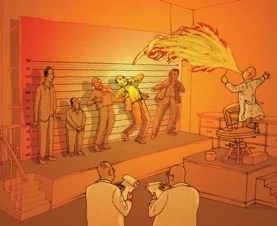
A FLAMIMG MAGICIAN DETECTING THE REAL CRIMINAL (NOTE THE DISPARATE PARTICIPANTS OF THE LINEUP). From the Scientific American Aug 18 2015

The bloom is certainly off the flower, when the SA starts publicizing the mythologies contained in the corners of forensic expertise.

Can We Trust Crime Forensics?

How trustworthy are DNA and other crime scene tests?

The criminal justice system has a problem, and its name is forensics. This was the message I heard at the Forensic Science Research Evaluation Workshop held May 26–27 at the AAAS headquarters in Washington, D.C. I spoke about pseudoscience but then listened in dismay at how the many fields in the forensic sciences that I assumed were reliable (DNA, fingerprints, and so on) in fact employ unreliable or untested techniques and show inconsistencies between evaluators of evidence.

The conference was organized in response to a 2009 publication by the National Research Council entitled Strengthening Forensic Science in the United States: A Path Forward, which the U.S. Congress commissioned when it became clear that DNA was the only (barely) reliable forensic science. The report concluded that “the forensic science system, encompassing both research and practice, has serious problems that can only be addressed by a national commitment to overhaul the current structure that supports the forensic science community in this country.” Among the areas determined to be flawed and in need of more research are: accuracy and error rates of forensic analyses, sources of potential bias and human error in interpretation by forensic experts, fingerprints, firearms examination, tool marks, bite marks, impressions (tires, footwear), bloodstain-pattern analysis, handwriting, hair, coatings (for example, paint), chemicals (including drugs), materials (including fibers), fluids, serology, and fire and explosive analysis.

Take fire analysis. According to John J. Lentini, author of the definitive bookScientific Protocols for Fire Investigation (CRC Press, second edition, 2012), the field is filled with junk science. “What does that pattern of burn marks over there mean?” he recalled asking a young investigator who joined him on one of his more than 2,000 fire investigations. “Absolutely nothing” was the correct answer. Most of the time fire investigators find nonexistent patterns, Lentini elaborated, or they think a certain mark means the fire burned “fast” or “slow,” allegedly indicated by the “alligatoring” of wood: small, flat blisters mean the fire burned slow; large, shiny blisters mean it burned fast. Nonsense, he said. It may take a while for a fire to get going, but once a couch or bed burns and reaches a certain temperature, you are not going to be able to discern much about its cause.

Lentini debunked the myth of window “crazing” in which cracks indicate rapid heating supposedly caused by an accelerant (arson). In fact, the cracks are caused by rapid cooling, as when firefighters spray water on a burning building with windows. He also noted that burn marks on the floor are not the result of a liquid deliberately poured on it. When a fire consumes an entire room, the extreme heat burns even the floor, along with melting metal and leaving burn marks under a doorway threshold, which many investigators assume implies the use of an accelerant. “Most of the ‘science’ of fire and explosive analysis has been conducted by insurance companies looking to find evidence of arson so they don’t have to pay off their policies,” Lentini explained to me when I asked how his field became so fraught with pseudoscience.
 

Posted in Uncategorized | Tagged , , , , , , , | 3 Comments

DNA tech’s reference semen DNA or sloughed skin shows up in 2014 super sensitive profile of 1984 murder case

Police used a lie detector on an over cooperating retired crime lab tech to concoct a “confession” that is nothing of the sort. This story is dominated by overarching confidence from San Diego law enforcement that “DNA always gets our perps” which ignores common sense and known facts of how sloppy labs were in the 1980’s. They trashed the retiree who recently committed suicide. His wife has filed suit to uncover the “now closed” police investigation. From The Atlantic.


Posted in Crime, criminal justice, CSI, DNA mixtures | Tagged , , | Leave a comment

“New” FBI DNA stats changes likelihood of mismatch frm 1:Billion to 1:100

Earlier this year the feds said revamped stats of DNA mixtures would make nary a blip in final crime lab results. Texas DPS found that to be a mega overstatement. The product rule strikes again. 

Texas DNA results

Posted in CSI, DNA mixtures, DNA profiling, Forensic Science | Leave a comment

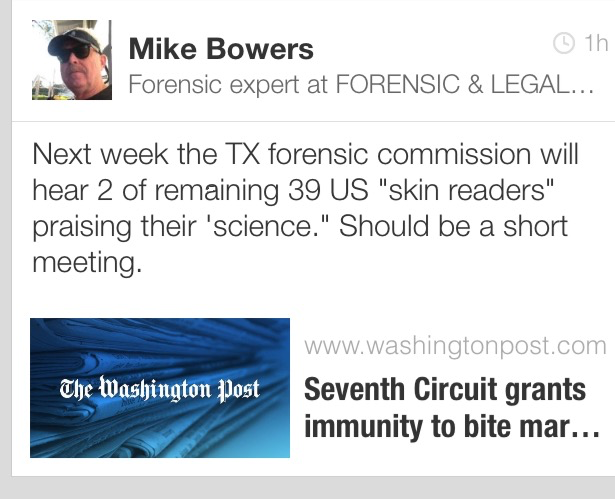
Sept 16 2015 The “bite mark magicians” take on the TX Forensic Sci Comm

No consequences for bite mark experts helping convict innocent defendants.

Posted in Uncategorized | Leave a comment

175 innocent men have been on death row in the US

Read about Richard Glossip in Oklahoma. 

http://www.innocenceproject.org/news-events-exonerations/barry-scheck-urges-oklahoma-governor-to-stay-glossip-execution

Posted in Uncategorized | Leave a comment

TX lady prosecutor denies failures to follow Brady rules, stating nothing withheld was exculpatory

Now, should we believe her? Her conviction case was remanded for a new trial. Of course the DA’ s office is appealing the lower court’s judgement of wrongdoing.

Her admitting that material was withheld from the defense in the original murder trial lends some figment of suspicion. A judge agreed with the defense motion citing 38 instances of misconduct.

Full story.


Posted in prosecutorial misconduct | Tagged | Leave a comment

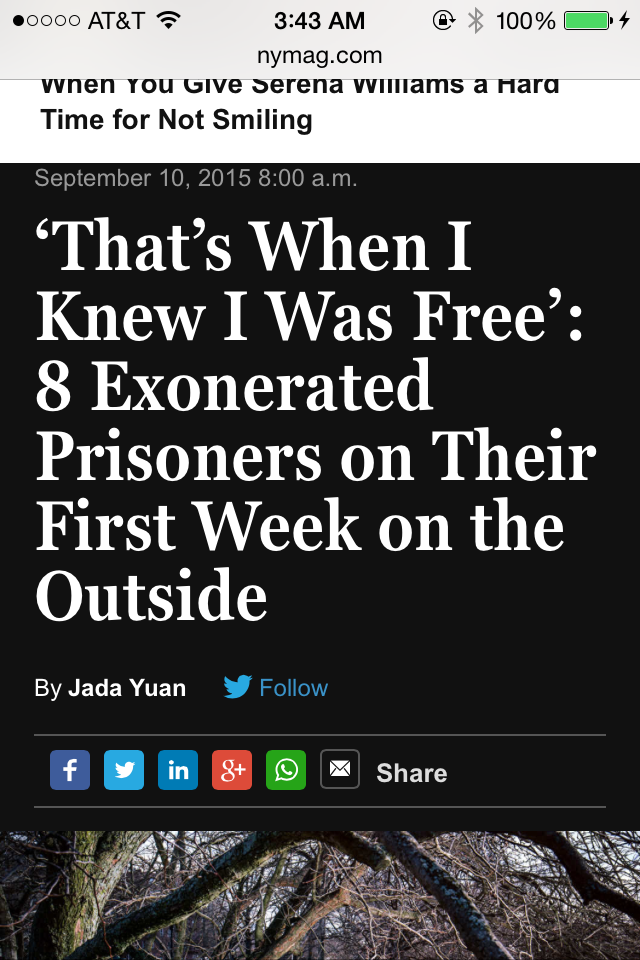
8 exonerees’ first days of freedom

  
Learn from this glimpse into the lives and experience of returning to society after years in prison. 
First days of freedom

Posted in Uncategorized | 1 Comment

From the Archives: U.S. Mississippi Death Row Case Faults Bite-Mark Forensics

SEPT. 15, 2014

NEW YORK TIMES

In one of the country’s first nationally televised criminal trials, of the smirking serial murderer Ted Bundy in Florida in 1979, jurors and viewers alike were transfixed as dental experts showed how Mr. Bundy’s crooked teeth resembled a bite on a 20-year-old victim.

Mr. Bundy was found guilty and the obscure field of “forensic dentistry” won a place in the public imagination.

Since then, expert testimony matching body wounds with the dentition of the accused has played a role in hundreds of murder and rape cases, sometimes helping to put defendants on death row.

But over this same period, mounting evidence has shown that matching body wounds to a suspect’s dentition is prone to bias and unreliable…..

Full article

Posted in Bitemarks, junk forensic science | Tagged , , , , , | Leave a comment

Wednesday’s Quick Clicks…

More about costs of wrongful convictions. Its $4 million in Conn. The LA Times article gives the impotent jurisprudence side of the US federal judiciary in regards to its having little oversight when state courts mess up convictions.

Mark Godsey's avatarWrongful Convictions Blog

View original post

Posted in Uncategorized | Leave a comment

THE SHIFTED PARADIGM: FORENSIC SCIENCE’S OVERDUE EVOLUTION FROM MAGIC TO LAW

A federal magistrate judge speaks words denouncing forensic science superstitions, as some others in the judiciary attack similar soothsayers, and a Virgina Law Review article expounds on a criminal justice system that can’t keep up with science and lacks tools to counteract flacks and fakes.  Or correct its mistakes in a timely manner due to outmoded Rules of Evidence and Judicial Review protocols. 

“Today,” the court wrote, “with the benefit of extraordinary progress in human knowledge regarding fire science over the past two decades it is now uncontested that this fire science evidence – which was a critical component in the quantum of proof that led to . . . [the] conviction – is invalid, and that much of what was presented to . . . [the] jury as science is now conceded to be little more than superstition.”

BACKSTORY

“When a federal magistrate judge recommended that the United States District Court for the Middle District of Pennsylvania exonerate Han Tak Lee for the murder by arson of his young daughter, he began his report this way:  “’Slow and painful has been man’s progress from magic to law.’” Lee’s daughter, the court explained, had perished “in a tragic cabin fire at a religious retreat,” and the State’s evidence “was based, to a substantial degree, upon what was at the time undisputed scientific evidence concerning the source and origin of this fire, fire origin evidence which tended to show that the fire which consumed this cabin and took the life of . . . [the victim] was deliberately set by the defendant in a calculated fashion.” Lee had been wrongly imprisoned for twenty-five years, the State’s conviction rested on the theory, elicited through expert testimony, that Lee “was especially cruel and calculating, dousing . . . [the] small cabin in Pennsylvania’s Pocono Mountains with more than 60 gallons of gasoline and heating fuel and setting at least eight fires, ending at the front door to block any chance of escape.”

4 Va. J. Crim. L. __ (forthcoming 2016) by Chris Fabricant and Tucker Carrington III (long read).

shifted paradign in forensic science


Posted in Uncategorized | Tagged , , , , , , | 1 Comment