#Mellennial Forensics: See the public response to “Knee Jerk Forensic Denials by DAs”

ramos-knees

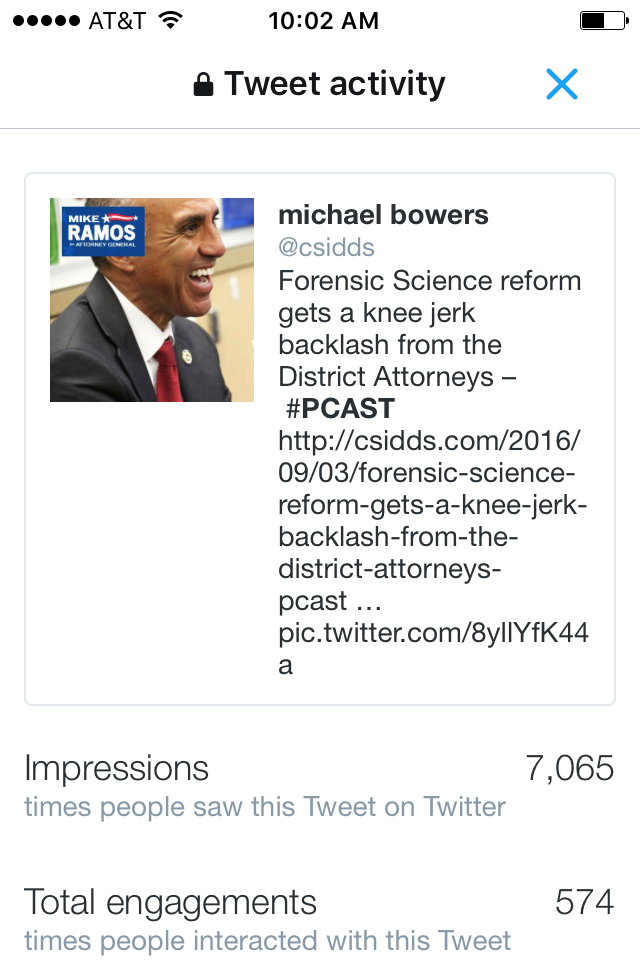
This fellow is running for CA Attorney General. He is also quite headliner for  believers in “speeding” executions via Prop 66. Despite wrongful convictions taking decades to be accomplished. Read about how the DAs responded to the 2016 forensic report from the President’s Council on Science and Technology. See the issues of forensic reform. 

Posted in Uncategorized | Tagged , , | Leave a comment

How Bitemark evidence is still operating at the appellate level – The Kunco Case

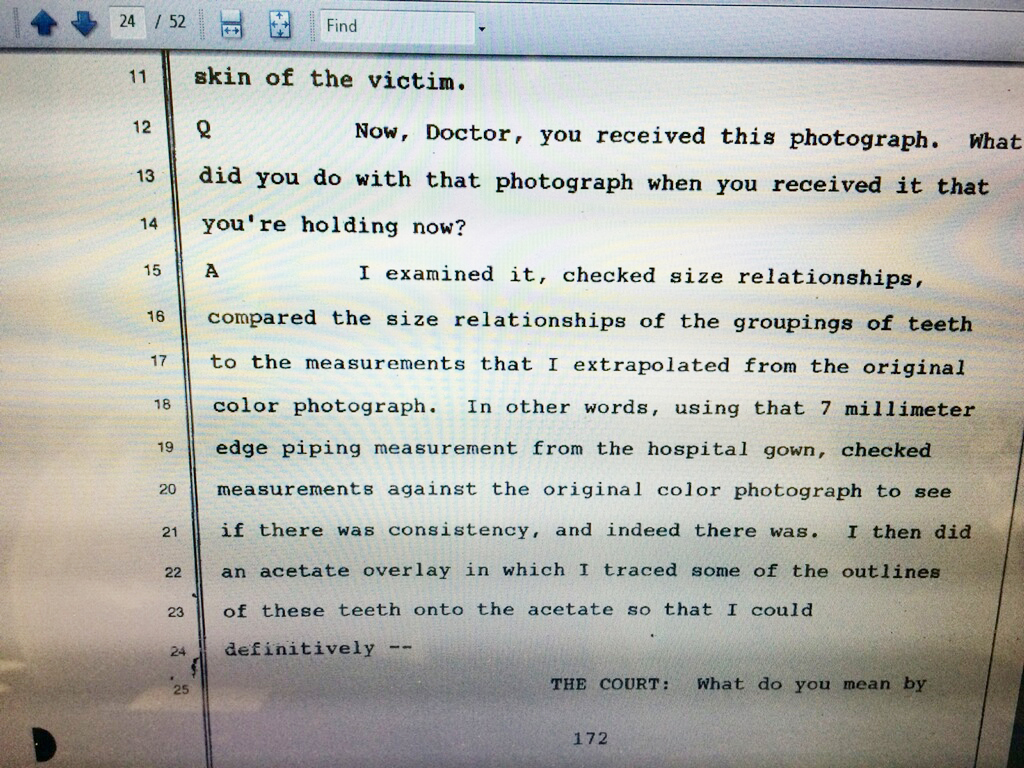
Read the trial testimony of a bitemark expert in this 1991 murder trial. He talks “about consistencies” which later became an “identification.”

kunco-transcript

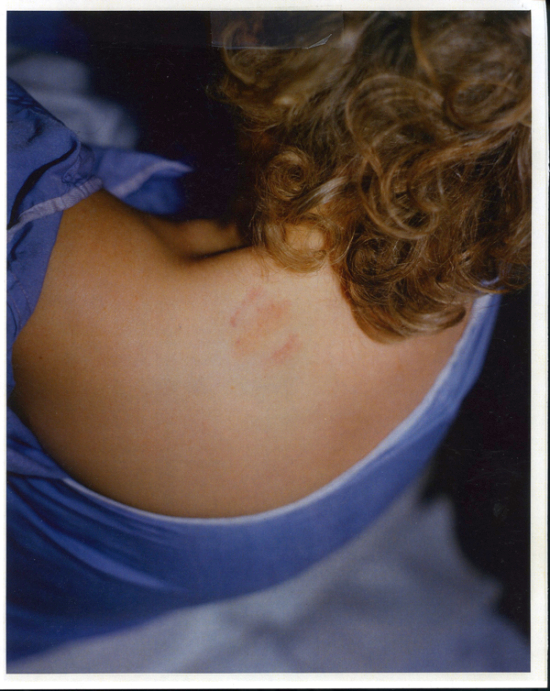
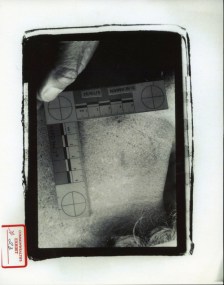
Here’s the bitemark “injury” he is talking about.

kunco-shoulder

csidds's avatarFORENSICS and LAW in FOCUS @ CSIDDS | News and Trends

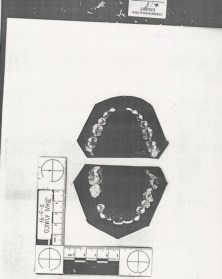
The “relatively unique teeth” of John Kunco

The “recaptured” evidence used against Kunco.

There still is a long road for prison inmates to overcome what now is considered to be unvalidated “science” presented at their original trials. John Kunco’s case is a standout and is still being litigated by the NY Innocence Project. Some of the bitemark fellows are having problems with their past cases which mimic the IP’s case list of successful conviction reversals and full exonerations involving bitemark opinions. Such as Steven Chaney’s in Texas.

A two article blog post by David Averill about Kunco and the ongoing  bitemark “war” is available here. It contains numerous evidence photos and further case info. The  “excerpts” give you the gist of what some have called “voodoo science” (Wall St Journal, yesterday). Its second section is what the judge said during Kunco’s previous appeal.

Bitemark Evidence in the Kunco Case

[excerpts]

May 15…

View original post 1,189 more words

Posted in Uncategorized | Leave a comment

The California history of familial DNA searches for criminal suspects

Baby Crying Funny Quotes

Good example of the progression of a valid and reliable forensic method advance towards acceptance. It makes many of the “pattern-matchers” weep in despair.

http://www.latimes.com/local/lanow/la-me-familial-dna-20161023-snap-story.html

Posted in Uncategorized | Tagged , | Leave a comment

Big blowup in FLA about ‘secret’ STRmix DNA software program

Image result for strmix

Broward county is having some crime lab problems. Some damned whistleblower got to the damned journalists. A commercially (hence private) software program for mixed blood samples isn’t helping too much either. This Google search on ‘mixed DNA litigation’ brings up up numerous arguments and concerns on the world of  ‘mixed’ bloodstains.’

The forensic sci industry jump into selling their “progies” to the LEOs is strangely similar to the privatization prison companies. Less public oversight for starters.

Full article about Broward DNA.

[excerpt]

But as Buzzfeed News reported earlier this year, the main problem with STRmix and other DNA-matching software programs is that hardly anyone knows how they work. That’s by design: The companies claim their methods are trade secrets and have been fighting to keep source codes under wraps. As a result, defense attorneys aren’t able to have experts independently verify the results.

Posted in Uncategorized | Tagged , , , , , , , , , , , , , , , , , , , , , , , , , , , , , , , , , , , , , , , , , , , , , , , , , , , , , , , , , , , , , , , , , , , , , , , , , , | Leave a comment

Forensics: Accusing a crime lab of planting evidence, innocent man executed in CA, +++more

“Quick Clicks” From the Wrongful Conviction Blog.

Posted in Uncategorized | Tagged , , , , , , , , , , , , , , , , , , , , , , , , , , , , , , , , , , , , , , , , , , , , , , , , , , , , , , , , , , , , , , , , , , , , , , , , , , | 1 Comment

Forensics and Criminal Law Potpourri – Some good stuff about innocence, arson, exon $$

Image result for bad science jokes

From the Center for Wrongful Convictions’ Friday blog.

Posted in Uncategorized | Tagged , , , , , , , , , , , , , , , , , , , , , , , , , , , , , , , , , , , , , , , , , , , , , , , , , , , , , , , , , , , , , , , , , , , , , , , , , , | Leave a comment

Parsing the error rates a judge found acceptable for a “ballistic similarity” = “identification”

Image result for error rate

The war of words about what is ‘reliable’ about forensic opinions is getting stretched and compressed depending on the source of comment.

The fingerprint corp called the IAI  had its’ president put a 3/4 page blast out about his ‘standing’ strong on the IAI foot print methods. Here it is for those so interested in it. The President’s Council on Sci put out a 179 page report. This IAI person got exercised about it enough to barely fill a single typed page, so it must have been written at night.

Here is this picture of him in case you might run into him at some meeting. Meet Harold Ru[slander]. This is an example of ‘compressed” to say the least. No errors, period.

President Harold Ruslander

So, enough hilarity for now. The judicial machinations on forensic reliability is apparently being twisted into what this ex-lawyer considers to be ‘acceptable error.’  By a judge, remember. To be judged later by more judges.

Here is Grits for Breakfast presenting a question being asked and answered by judges all the time.

“What’s a ‘good error rate’ in non-science forensics testimony?” Harold thinks its aok. Of course,  the IAI self-publishes all its ‘scientific’ findings.

What error rate would justify excluding non-science-based forensics?

[excerpt]

 A recent report from the President’s Council of Advisers on Science and Technology renewed concerns first raised by the National Academy of Sciences in 2009 about the lack of scientific foundation for many if not most commonly used forensics besides DNA and toxicology. Our friends at TDCAA shared on their user forum a link to the first federal District Court ruling citing the PCAST report, focused in this instance on ballistics matching.

The federal judge out of Illinois admitted ballistics evidence despite the PCAST report because he considered estimated false-positive rates relatively low. Here’s the critical passage on that score:

PCAST did find one scientific study that met its requirements (in addition to a number of other studies with less predictive power as a result of their designs). That study, the “Ames  Laboratory study,” found  that toolmark analysis has a false positive rate between 1 in 66 and 1 in 46. Id. at 110. The next most reliable study, the “Miami-Dade Study” found a false positive rate between 1 in 49 and 1 in 21. Thus, the defendants’ submission places the error rate at roughly 2%. The Court finds that this is a sufficiently low error rate to weigh in favor  of  allowing  expert  testimony. See  Daubert  v.  Merrell  Dow  Pharms.,  509  U.S.  579,  594 (1993) (“the court ordinarily should consider the known or potential rate of error”); United States v. Ashburn, 88 F. Supp. 3d 239, 246 (E.D.N.Y. 2015) (finding error rates between 0.9 and 1.5% to favor admission of expert testimony); United States v. Otero, 849 F. Supp. 2d 425, 434 (D.N.J. 2012)  (error  rate  that  “hovered  around  1  to  2% ”  was  “low”  and  supported  admitting  expert testimony).  The  other  factors  remain  unchanged  from  this  Court’s  earlier  ruling  on  toolmark analysis.

Using a 2 percent error rate could understate things: The error rates from the studies he cited ranged from 1.5 to 4.8 percent, so it could be twice that high (1 in 21). Still, I’m not surprised that some judges might consider an error rate of 1.5 to 4.8 percent acceptable. And the judge is surely right that the PCAST  report provides a new basis for cross-examining experts and reduces the level of certainty about their findings which experts can portray to juries, so that’s a plus.

Full article where Grits makes some more good points.

Posted in Uncategorized | Tagged , , , , , , , , , , , , , , , , , , , , , , , , , , , , , , , , , , , , , , , , , , , , , , , , , , , , , , , , , , , , , , , , , , , , , , , , , , | Leave a comment

How-To about jury deliberations that do not convict the defendant

Image result for not guilty meme

“Jury Myths” is an op-ed by a defense attorney on popular definition misconceptions regarding legal procedural and factual differences;  he compares ‘innocence’ versus ‘not guilty’ versus ‘guilty’ outcomes at criminal trials.

It boils down to  ‘actual innocence’  being a product of defense efforts. That’s obvious, of course. But, this determination can occur years is after the conviction. At a trial, it may be argued by the defense using  ‘exculpatory evidence’  [maybe DNA]. Of course, this implies for some reason that the prosecutor has his/her own claim that the evidence is ‘not ‘compelling’ within their theory of guilt. Hence the trial to decide who wins. Even if the jury agrees with the defense, the jury choice is merely ‘not guilty.’ Not ‘innocence.’ That’s what the defendant’s trial attorney says afterwards on the courthouse steps. You can apply all this to Steven Avery’s attorneys’ statements in the “Making a Murder” media claims.

From ‘The Secret Barrister’ blog, The nexus of this is the Chad Evan’s trial in the UK.

[excerpt: Note that there are 9 more ‘myths.’

1. So Ched Evans has been proved innocent, right?

Wrong. You’d be forgiven for thinking this, given that it was in the prepared statement read out by his solicitor, but Ched Evans has not “demonstrated his innocence”. That is not how our criminal justice system operates. It is not a means by which the truth of a situation or event is conclusively and fully determined. Rather the jury are asked one simple question – are you sure that the prosecution has proved its case beyond reasonable doubt (or, as juries are commonly instructed, so that you are sure)? “Not guilty” means just that. The jury were not sure that he was guilty. They may have decided that he was totally, utterly innocent, but we don’t know. All we know is that they considered the evidence, and were less than sure of his guilt. As I tell juries in every closing speech – if you think the defendant probably did it, he’s still not guilty. 


Posted in criminal justice | Tagged , | Leave a comment

Netherlands Forensic Institute ranks high in world-wide successful investigations

I hear that the NFI ( located at the Hague ) also has an excellent physician/forensic anthropologist traveling the world on these cases. I love those loupes!

Reza R.R. Gerretsen

This article highlights the world-wide scope of a national crime lab.  I haven’t seen much positive PR recently about anything similar out from the equivalent US governmental crime labs. Just the US Attorney General Loretta Lynch and her peers dissing the President’s Science Council report meant to improve accuracy in certain impression-matching forensic ‘science.’ See:  Bringing the Prosecutors kicking and screaming into the light of scientific standards. 

Related: CSI The Hague

NFI Video tour 

Posted in criminal justice reform, CSI, Identification DVI, Mass Disaster recovery | Tagged , , , | Leave a comment

NRA must be upset over this one – “defense of another” dosen’t bother DA

Image result for nra self defense of others

“The shooting happened the day after Acosta-Sanchez had eluded police efforts to arrest him and an ensuing manhunt involving police and forest rangers, as well as dogs, ATVs and helicopters. Acosta-Sanchez escaped by swimming across the Rio Reservoir. Police broke off their search at nightfall.

The morning of Oct. 11, 2013, Acosta-Sanchez showed up at Carlson’s door. Carlson marched him at gunpoint to a neighbor’s home so someone could call 911. Carlson told police Acosta-Sanchez lunged at him, and he fired the gun. Acosta-Sanchez lunged again, and Carlson fired a second time, hitting Acosta-Sanchez in the head and killing him instantly.”

Full article

Posted in Uncategorized | Leave a comment