Framed By Your Own Cells: How DNA Evidence Imprisons The Innocent
Marina Medvin
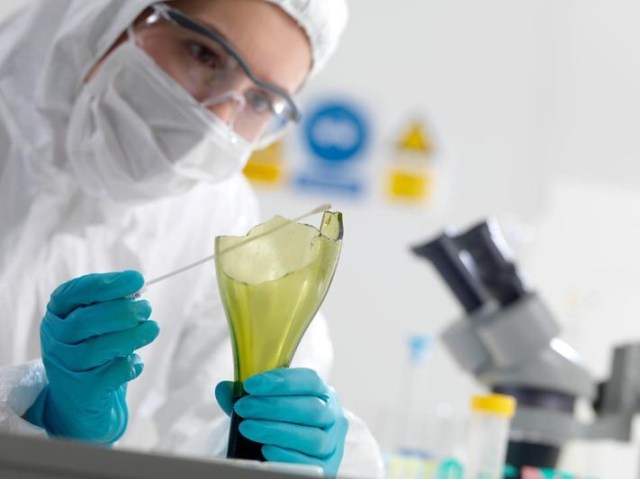
Tiny amounts of touch-transferred DNA have placed people at locations they had never visited and implicated people for crimes they did not commit. | Getty Images
Modern technologies can now detect and analyze DNA from samples comprised of only 16 cells. But due to the touch-transfer properties of DNA, determining how those cells reached the surface on which they were found is impossible. Tiny amounts of touch-transferred DNA have placed people at locations they had never visited and implicated people for crimes they did not commit.
Forensic technologies detecting and analyzing DNA evidence have been at the forefront of criminal investigations. Scientists have told us that the perpetrator of a crime will leave traces of his DNA at the crime scene, and if found in even in small amounts, the evidence can be used to identify the perpetrator. Finding a suspect’s DNA at a crime scene, on a victim, or on a piece of evidence, is consistently used by law enforcement to place a suspect at the scene of the crime, with the victim, or in contact with the relevant piece of evidence. Prosecutors have been representing DNA evidence as superior to all other types of identification evidence. However, research conducted at the University of Indianapolis shows that the detection of DNA does not actually indicate presence or contact. In fact, it may not narrow the scope of the investigation at all.
This is because humans shed DNA continuously, and shed DNA transfers freely between people and objects. DNA can be transferred through a handshake or touching an inanimate object, like a doorknob. Every time you shake someone’s hand you might receive some of your acquaintance’s DNA, and that of other people whose DNA had come into contact with your acquaintance’s hand. Scientists refer to this phenomenon as “secondary transfer DNA,” while journalists have been using the term “touch DNA.” I will use a more global term, “touch-transfer DNA,” to describe DNA transferring easily through contact or touch.
Imagine a man waiting at a restaurant for a business associate. His business associate opens the restaurant door, then walks over to the man and shakes the man’s hand with the same hand the associate used to open the restaurant door. The man has now received a DNA transfer of his associate’s DNA, and any DNA that the associate’s hand picked up on the restaurant door handle. If we were to swab the man’s hand for DNA, we might find the man’s DNA, his associate’s DNA, and the DNA of a few other unknown people who touched the door handle of the restaurant and whose DNA stuck around, people who the man never touched. The DNA of these other people transferred to the man’s hand through the touch-transfer properties of DNA.
Similarly, a person identified by a match of DNA discovered at a crime scene may have never come into contact with the object or the person on which his DNA was found. Yet, modern day high-tech CSI investigations do not account for the possibility that the evidence discovered at a crime scene was deposited via touch-transfer.
When DNA detection capabilities emerged in the 1980s, forensic technologies had much lower sensitivity and required large, visible samples for DNA analysis. Over the past decade, forensic technologies used by law enforcement have become so highly sensitive that the quantum of DNA required for analysis has become very low. Samples of DNA may now be invisible and so low in size and quality that older forensic equipment would not be able to detect any DNA; samples entirely invisible to the human eye. Only a sample of about 16 cells is required for modern equipment to analyze the DNA within. Compare this to the tens of thousands of skin cells that we shed each day.
The concept of obtaining identifying information from tiny bits of touch-transfer DNA was first discovered by an Australian scientist and published in 1997 under the title “DNA fingerprints from fingerprints.” The scientist discovered that tiny bits of DNA would transfer through touch, together with fingerprint markings, allowing for the collection and analysis of DNA from fingerprints left behind by culprits. Practical utility in the criminal justice world required the emergence of more sensitive technologies to detect the infinitesimal bits of evidence. Such equipment began appearing in forensic laboratories over the last 15 years. But law enforcement did not limit their search for touch-transfer DNA to just fingerprints; instead, they expanded the search for touch-transfer DNA to all objects and surfaces, irrespective of the ability to find other identifying evidence connected to that DNA, such as a fingerprint. This led to the prosecution of individuals based on DNA from low-template and low-quality samples not connected to other identifying data. Moreover, prosecutors failed to distinguish the unique nature of touch-transfer DNA and the likelihood of random and innocent touch-transfer origins, presenting it to juries as the equivalent of a smoking gun. Albeit, the Australian scientist who presented the concept of touch-transfer DNA, also noted that some people’s DNA curiously appeared on things that they had never touched.
Four Indianapolis scientists recently questioned the reliability of the modern day high-sensitivity forensic lab technologies used by law enforcement to identify suspects via DNA. They explained that even though current technologies utilized by forensic laboratories are now reading DNA profiles from low-template and low-quality samples, they have “not been systematically investigated.” The scientists published their findings in 2016, in the Journal of Forensic Science, under the heading: Could Secondary DNA Transfer Falsely Place Someone at the Scene of a Crime? Their answer was an unequivocal yes. Touch-transfer DNA “could falsely link someone to a crime” and forensic scientists relying on modern high-sensitivity equipment could “falsely conclude that DNA left on an object is a result of direct contact.” Their findings revealed that it is impossible for scientists to determine whether the tiny bits of DNA came into contact with evidence from a direct source or via secondary source. And, that no matter how much they tried to sanitize their experiment, unknown third-party DNA was nonetheless able to make its way into the results, highlighting the plausibility of cross-contamination with touch-transfer DNA.
The FBI standards for DNA laboratories were last updated in 2011, and, to this day, no changes have been made to reflect the 2016 Indianapolis findings. There are currently no widespread standards in place that are specifically aimed at preventing cross-contamination with touch-transfer DNA in the laboratories where various evidentiary objects are examined. This means that when objects that are placed on shared surfaces in the laboratory, to be examined or photographed, for example, they are subjected to cross-contamination by touch-transfer DNA. The same goes for the initial discovery and investigation of the evidence when the evidence is first handled by police officers.
The presentation of touch-transfer DNA as bulletproof to a jury is thus even more worrisome. During a criminal trial, lawyers for the government and for the accused are expected to present competing possibilities of how a crime could have occurred, and who may have been responsible for the crime. A jury is not confined to mathematical computation of criminal culpability. Instead, a jury is free to choose among reasonable constructions of the evidence. Overcome with anxiety and fear of making the wrong choice, jurors tend to rely on the existence of, or the lack of, forensic or DNA evidence presented to them at trial. Thus, when prosecutors present to a jury touch-transfer DNA evidence with the same oomph as large-sample DNA evidence, the jurors, under the influence of pre-set expectations for scientific evidence to prove culpability and the common notion that DNA evidence is inherently trustworthy, feel compelled to convict. The result is touch-transfer DNA can readily lead to conviction of the innocent.
In 2007, Amanda Knox was charged with the murder of her roommate based a minuscule amount of touch-transfer DNA. Knox’s DNA, and the DNA of the victim, were found on a kitchen knife that was located in the home of Knox’s friend, who was charged as a co-conspirator in the murder. Since the victim was never in the co-conspirator’s residence, the prosecution insisted that the only way for the victim’s DNA could have found its way into that home and onto that knife, would have to be through direct contact—the murder. In 2009, an Italian jury convicted Knox, even though the knife in question did not match the entry wounds on the victim’s body. It was not until 2015 that Ms. Knox was exonerated based on a more precise understanding of how DNA transferred through contact and on concerns with touch-transfer DNA cross-contamination.
In 2012, Lukis Anderson was arrested and charged with the murder of a millionaire in California. Traces of his DNA were found on the victim’s fingernails. Law enforcement crafted a theory of the case based on this evidence and Anderson’s lengthy criminal record, dangling the death penalty over Anderson’s head. Anderson was unable to effectively assist in his own defense. “Maybe I did do it,” he told his public defender, not remembering what happened on the night in question due to significant intoxication. After spending five months in jail, Anderson was released when it was uncovered that he was at the hospital when the crime occurred, recovering from intoxication. But how did his DNA get onto the victim’s fingernails? Anderson was the victim of touch-transfer DNA misinformation. The two paramedics who had treated Anderson for intoxication, hours before the millionaire was murdered, later responded to the scene of the murder with Anderson’s DNA already on them. Contact between the paramedics and the millionaire resulted in the exchange of DNA on their hands, which just happened to include Anderson’s DNA from contact that took place hours prior.
In 2014, Oklahoma City police officer Daniel Holtzclaw was charged with various sexual assault crimes stemming from accusations of women he encountered while on patrol. While the case initially appeared brittle, from ever-changing victim accounts to evidence contradicting the stories altogether, a speck of DNA from one of the accusers was found on the officer’s uniform pants. Unlike a visible sample of identifiable DNA (think Monica Lewinski’s blue dress stain), the DNA found on Holtzclaw’s pants was instead invisible, touch-transfer DNA. In fact, his patrol car’s door handle produced four times as much DNA as the speck on his pants. The evidence also confirms that Officer Holtzclaw searched the accuser’s purse for evidence on behalf of the police department, before he was swabbed for DNA, rummaging through her personal belongings, his hands plausibly coming into contact with a plethora of her DNA. He also used the restroom, touching his pants in the process. Consistent with touch-transfer DNA properties, an unaccounted-for and unknown male’s DNA had also been found on Holtzclaw’s pants together with the female’s DNA. Nevertheless, the prosecutor told the jury that the speck of female DNA evidence was conclusive proof of sexual contact between Holtzclaw and the victim, and then, unsupported by his own evidence, claimed that the particular DNA came from the victim’s vagina—a scientifically impossible conclusion. The jury found Holtzclaw guilty and sentenced him to 263 years in prison. His appeal is presently pending. Daniel Holtzclaw currently sits behind bars and maintains his innocence.
These are just three examples of a yet unknown total amount of criminal prosecutions based on the government’s reliance on touch-transfer DNA evidence at trial. At least one of the affected defendants, Daniel Holtzclaw, is still imprisoned. Many others may be charged in the future.
On at least one known occasion, the lack of touch-transfer DNA has been used by a government to “clear” suspects. In 2008, the Boulder County District Attorney cleared members of the JonBenet Ramsey family as suspects in the high-profile murder case when investigators did not find any touch-transfer DNA from members of the slain girl’s family on her clothes. The Ramsey case remains the exception rather than the rule.
As of now, anytime we touch a public surface, we remain fair game for criminal suspicion based on touch-transfer DNA.
Moving forward, law enforcement must reduce reliance on DNA evidence while investigating a criminal case. It is not a dependable means of understanding the connection between the DNA and the crime. For criminal trials, it should become standard practice for judges to sustain defense motions for the exclusion of DNA evidence on the grounds that DNA evidence is confusing and misleading, highly prejudicial, speculative and inherently unreliable. Otherwise, our courts risk DNA convicting the innocent.
I am a columnist and political commentator. I am also a trial attorney, recognized by Washingtonian Magazine as one of Washington DC’s Best Lawyers. I have represented…MORE
https://www.forbes.com/sites/marinamedvin/2018/09/20/framed-by-your-own-cells-how-dna-evidence-imprisons-the-innocent/amp/?__twitter_impression=true